Category Archives: French food

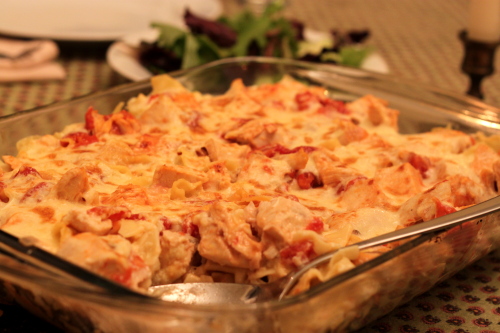
Chicken and Noodles Baked in Cream Sauce

Every family has its own set of favorite meals and often its owns way of labeling them. Case in point, when my husband asks for “Thomas Jefferson’s chicken” what he really wants is gratin de volaille pavillon, a fancy name for the best chicken and noodles you’ll ever eat. We found this dish in college, pulled from The New York Times More 60-Minute Gourmet, which introduces the recipe by noting that this variation of chicken in cream sauce was “much admired by Thomas Jefferson.” Not sure how this culinary tidbit made it to modern times, but it stuck with us.

Though this preparation is not as easy as your average condensed soup-based casserole, the extra effort it requires is soon forgotten as you bite into the delicately sauced poached chicken and tender, buttery, tomato flecked noodles. It’s easy to see why it may have been a favorite of one of America’s founding fathers.

Gratin de Volaille Pavillon (Chicken and Noodles Baked in Cream Sauce)
adapted from The New York Times More 60-Minute Gourmet by Pierre Franey

Serves 6

2 cooked whole chicken breasts (see recipe for poaching chicken below, highly recommended)
12 oz (340 g) medium width egg noodles
5 tablespoons (75 g) butter, divided
3 tablespoons flour
2 cups (500 ml) chicken broth (use the broth from the poached chicken if possible)
1/2 cup (125 ml) heavy cream
salt and freshly ground black pepper
2 tablespoons shallots, finely chopped
1 ripe tomato, chopped (or 1 cup canned diced tomatoes, drained)
1 egg, lightly beaten
2 tablespoons freshly grated Parmesan cheese

Remove the chicken from the bones. Discard the skin and bones and cut the meat into 1 or 2 inch cubes. There should be about 3 cups.

Cook the noodles according to the package directions. Do not overcook. Drain the noodles. Return them to the pot and add 1 tablespoon of butter. Toss gently.

Meanwhile, melt 2 tablespoons (30 g) of butter in a saucepan and add the flour, stirring with a wire whisk. When blended, add the chicken broth, stirring rapidly. When the sauce is thickened and smooth, simmer for about 5 minutes. Add the cream and let it simmer briefly. Season to taste with salt and pepper. Set aside.

Melt 2 tablespoons (30 g) of butter in another saucepan and add the shallots. Cook briefly, stirring, then add the tomatoes and cook down for about 3 minutes. Add the chicken and salt and pepper to taste. Add 1 cup (250 ml) of the cream sauce and stir gently; set aside.

To the remaining cream sauce, add the egg. Bring to a boil stirring rapidly with a whisk. Do not overcook. Remove from the heat.

Butter a 13 x 9 inch baking pan with the remaining tablespoon (15 g) of butter. Add the noodles, and smooth them over. Spoon the chicken and sauce mixture over the noodles. Cover with the cream and egg sauce, smoothing it over. Sprinkle on the cheese. Place the dish under the broiler and cook until nicely browned and bubbling on top.

Poached Chicken

2 whole, bone-in, skin-on chicken breasts
2 cups (500 ml) water
1 cup (250 ml) dry white wine
1 small white onion, sliced
1 bay leaf
3 sprigs parsley
1 carrot, chopped
1 teaspoon salt
1/8 teaspoon pepper

Combine all the ingredients in a saucepan and bring to a boil. Cover and simmer gently for about 10 minutes. Uncover and set aside. Let the chicken cool in its own broth.

Lemon Chicken with Provençal Couscous and Peach and Blackberry Pandowdy

Heading down the hill on my way home after a walk this past weekend and thinking that I was glad I’d worn my fleece, I could see smoke coiling from the chimney of a neighbor’s farmhouse. While I’m not ready to say it’s autumn just yet, I did think to myself that this meal might well be marking the end of summer.

In Ireland, blackberries grow wild in the hedgerows and the countryside is full of them at the minute. I was lucky enough to be able to get all the blackberries I needed for this dessert just by stepping out my back door and picking them from in amongst the hedges that line the perimeter of my yard. I’m not so lucky when it comes to peaches though. They’re one of my favorite summertime treats, but the peaches that you buy in Ireland don’t have the same juice-dribbling-down-your-chin lusciousness as the ones you can get in the States. When I was back there in July, I got my fill of all the summertime staples I used to take for granted but now miss: bratwurst, frozen custard, iced coffee, sweetcorn, watermelon and, yes, peaches from the farm stand. I’m not giving up hope of having an Indian summer, but I’m taking a cue from my neighbor and will be stocking up on turf and firewood again all the same.

If your pastry-making skills aren’t the best, this is the perfect dessert for you. A pandowdy (the word actually means ‘unfashionable’ or ‘without style’) is like an upside-down pie, with the filling right in the dish and the crust on top. It’s a rustic dessert and is meant to look like one, so you don’t have to worry about perfect presentation — you can even make it in a cast iron skillet. As for me, I’m no pastry expert, and in fact used to avoid any recipes that called for it because I was so bad at it, but I’ve had great success using a tip I learned watching Rachel Allen’s Bake program this spring — roll out the pastry between two sheets of cling film. It won’t stick to your counter and you won’t have to add any extra flour for dusting, meaning the pastry will stay light and flaky. Try it!

Lemon Chicken with Provençal Couscous
lemon chicken adapted from The Barefoot Contessa Cookbook by Ina Garten and couscous from The Irish Independent, July 3, 2010

Serves 4

Please don’t be put off by the long list of ingredients for the couscous, it’s only a few spices and vegetables. This is the best couscous dish I’ve ever made — I promise it will be worth the effort of a bit of measuring and chopping.

for the lemon chicken:
1/3 cup (80 ml) freshly squeezed lemon juice (2 or 3 lemons)
1/3 cup (80 ml) olive oil
2 or 3 cloves garlic, finely chopped or grated
salt and freshly ground black pepper
4 boneless, skinless chicken breasts
2 large rosemary sprigs or a few sprigs of fresh thyme (or 1/2 teaspoon dried thyme)

for the Provençal couscous:
1/2 pint (300 ml) chicken stock
1/8 teaspoon turmeric
1/8 teaspoon paprika
1/8 teaspoon ground cumin
1/8 teaspoon chili powder
juice of 1/2 orange
6 oz (175 g) couscous
1 tablespoon olive oil
1 red onion, finely diced
1 red pepper, halved, deseeded and cut into 1/2‑inch cubes
1 yellow pepper, halved, deseeded and cut into 1/2‑inch cubes
1 clove garlic, chopped
1 small zucchini, cut into 1/2‑inch cubes
salt and freshly ground black pepper

To make the chicken, whisk together the lemon juice, olive oil, garlic, salt and pepper. Pour it over the chicken breasts in a casserole dish, then tuck in the fresh herbs around the chicken. Cover and marinate in the refrigerator for at least 2 hours, but ideally overnight. The next day, preheat the oven to 400°F (200°C). Remove the chicken from the marinade, shaking off any excess, and place on a baking tray. Roast in the oven for 30 minutes, or until cooked through.

Meanwhile, to make the couscous, bring the stock, spices and orange juice to the boil and cook gently for 10 minutes. Pour the couscous into a large bowl and pour a quarter of the liquid over it. Stir, cover completely with cling film and allow to steam for 10 minutes. Break up with a fork and pour in another quarter of the stock. Cover once more and let it rest for another 10 minutes. Loosen with a fork again. Add the rest of the stock and cover once more. Once the couscous has absorbed all the liquid and fluffed up, it is cooked. If there is any excess liquid after the couscous has fluffed up, you can simply drain it off.

While the couscous is steaming, you can get on with the vegetables. Heat a large frying pan over a medium heat. Sauté the onion for 2 to 3 minutes in the olive oil, then add the peppers and garlic. Cook for 2 more minutes, then add in the zucchini. Cook for a further 3 to 5 minutes, or until the vegetables are tender but still hold their shape. Season with salt and pepper, then mix the vegetables through the couscous.

Serve the chicken on warmed plates with a portion of Provençal couscous.

***

Gingered Peach and Blackberry Pandowdy
adapted from Rustic Fruit Desserts by Cory Schreiber and Julie Richardson

Serves 8 to 10

I know this recipe looks awfully long and involved, but honestly, it’s so straightforward my five-year-old daughter helped me to make it. This is the pastry recipe from Rustic Fruit Desserts, but if you have your own tried and true pie pastry recipe, just use that.

for the pastry:
1 1/4 cups (150 g) flour
1 tablespoon sugar
1/4 teaspoon fine sea salt
1/2 cup (110 g) cold unsalted butter, cut into 1‑inch cubes
1/4 cup (60 ml) ice water, or more if needed
1 1/2 teaspoons freshly squeezed lemon juice

for the filling:
2 lb (900 g) peaches, pitted (anywhere between 4 and 8 peaches, depending on size)
1/2 cup (100 g) sugar
juice of 1 large lemon
2 tablespoons cornstarch (cornflour)
2 tablespoons (15 g) chopped candied ginger
1/2 teaspoon ground ginger
1/2 teaspoon fine sea salt
1 dry pint (2 cups/about 300 g) blackberries, either fresh or frozen
vanilla ice cream or sweetened whipped cream, to serve

To make the pastry, put the flour, sugar and salt in a bowl, stir to combine, then put the bowl in the freezer for about 10 minutes, until super cold. Add the butter cubes to the flour mixture and toss evenly to coat. Cut the butter into the flour mixtures using a pastry blender, electric mixer or your hands, until the butter is about the size of peas. Stir the water and lemon juice together, then slowly drizzle over the dry ingredients, tossing with a fork to distribute the liquid. The pastry will be shaggy but should hold together when squeezed in the palm of your hand. If it doesn’t, add a few more drops of ice water. (Alternatively, just blend the flour mixture and butter in a food processor and slowly add the liquids until the dough has reached the right consistency.)

Tip the pastry onto a lightly floured surface and press down on the dough, folding it over on itself a few times until it holds together. Try not to handle it too much, or you’ll develop the gluten too much and your pastry will be tough. Shape the pastry into a 1‑inch-thick disc, wrap in cling film and chill in the fridge for at least 30 minutes. (If wrapped well, the pastry will keep for up to 3 days in the fridge of 3 months in the freezer; defrost frozen pastry discs overnight in the fridge.)

When the pastry has rested and you’re reading to make the pandowdy, preheat the oven to 400°F (200°C). Butter a 9‑inch deep-dish pie pan.

Wash the peaches, pierce the skins all over with a fork, then slice each peach into 10 to 12 slices, depending on how big the peach is. Put the peaches in a bowl, add the sugar and lemon juice, and toss gently until the fruit is evenly coated. Set aside for 15 minutes to draw out some of the juices, then strain the juice into a small saucepan. Cook over a medium heat, stirring occasionally, until the juices have reduced by half. Rub the cornstarch, candied ginger, ground ginger, and salt together in a bowl.

Remove the pastry from the fridge. Tear off 2 large pieces of cling film and place the pastry between the pieces. Roll it out between the sheets of cling film until it’s a little larger than the diameter of your pie pan or skillet. If you want, you can place the pie pan or skillet upside-down on top of the pastry and use it to cut the pastry to size, otherwise just eyeball it.

Add the cornstarch mixture and reduced juices to the peaches. Add the blackberries and stir gently until evenly combined. Pour the fruit mixture into the prepared pie pan and top with the pastry circle. If the crust is a bit larger than the pan or skillet, just tuck it inside (remember, it’s rustic!). Place the pie on a baking sheet to collect any drips. Bake for 50 minutes, or until the crust is golden and the fruit is bubbling. If you find that the top is browning too much, cover it loosely with foil for the rest of the cooking time. Cool for 1 hour before serving with some ice cream or a dollop of sweetened whipped cream.

Bouchons au Thon (“Tuna Corks”) with Green Salad

What is it with kids and ketchup? When my sister was a kid, she would put ketchup on just about everything, including fish sticks, which I used to think was particularly weird. The only time I ever eat ketchup is with fries, and even then only just a little and begrudgingly (I’m a salt and vinegar kind of girl). At a dinner party I was at a few years ago, one of the women there was telling a story of how her eight-year-old nephew had even given up ketchup for Lent, the point being that he loved ketchup so much, this was a real sacrifice. There isn’t any ketchup in these bouchons au thon (which roughly translates as “tuna stoppers” or “tuna corks”) but there is tomato paste, which is what gives them their burnt orange color. The first time I made this, I thought the combination of ingredients sounded odd, but it works; they’re like little quiches without a crust. And taking a cue from my kid sister all those years ago, if I serve these with some ketchup squeezed on top, then sure enough, my kids gobble them up. It’s a nice light dinner or lunch served with a green salad with a lemon vinaigrette, or lemon roast potatoes or herbed new potatoes if you want something more filling (or Molly Wizenberg suggests a baguette). If your kids like tuna, then these are handy for lunchboxes too.


Bouchons au Thon
adapted from A Homemade Life by Molly Wizenberg (or via Orangette here)

Serves 4 as a light dinner or lunch

2 x 4 oz (120 g) cans of tuna chunks (preferably water-packed), drained well
1 cup (100 g) finely grated Gruyère cheese (Fontina, Swiss/Emmental or Parmesan are all good substitutes)
1/3 cup (80 ml) crème fraîche
3 tablespoons tomato paste
3 large eggs, lightly beaten
4 scallions, finely chopped
2 or 3 sprigs flat-leaf parsley, finely chopped (about 2 tablespoons)
1/4 teaspoon salt

Preheat the oven to 325°F (160°C). Lightly grease 8 wells of a standard-size muffin tin.

Place the tuna in a mixing bowl and break up into small pieces. Add the cheese, crème fraîche, tomato paste, eggs, onion, parsley and salt, stirring to thoroughly combine. Divide the mixture evenly among the 8 muffin wells. Use water to fill any empty wells halfway full to prevent them from scorching. Bake for 20 to 25 minutes, or until the tops and edges of the bouchons are set.

Carefully pour the water out of the muffin wells, then dislodge the bouchons by running a butter knife around the inside edges of their wells. Let them sit for 2 to 3 minutes, then carefully extract them and transfer to individual plates (2 for each portion). They will collapse a bit as they cool. Serve warm or at room temperature.

Easy Sole Meunière with Parmesan Roasted Asparagus and Herbed New Potatoes

Sole meunière had its five minutes of fame last year when the movie Julie and Julia was released, which renewed interest in Julia Child. The story did the rounds of how it was Julia’s first (and ultimately life-changing) meal in France, which she described as “a morsel of perfection.” Who am I to disagree? It’s simple and delicious, a true classic.

This is an all-Ina menu from three different cookbooks, and everything comes together to make an elegant and easy springtime dinner that’s ready in half an hour. In the “Easy French” episode of her TV show, Ina Garten suggests serving the sole with a French apple tart, which would elevate this menu into something nice enough for company.

Note that this sole recipe serves 2 while the asparagus and potatoes serve 6, so adjust the recipes according to how many people you’re serving. You could also try green beans dressed with lemon and olive oil or lemon roast potatoes instead of the roasted asparagus and herbed new potatoes.

Easy Sole Meunière
adapted from Barefoot Contessa Back to Basics by Ina Garten

Serves 2

When I make this recipe, I add a little olive oil along with the butter to stop it from burning.

1/2 cup (60 g) all-purpose flour
salt and freshly ground black pepper
4 x 4 oz (110 g) fresh sole fillets
6 tablespoons (90 g) unsalted butter
1 teaspoon grated lemon zest
6 tablespoons freshly squeezed lemon juice (3 lemons)
1 tablespoon minced fresh parsley

Preheat the oven to 200°F (100ºC). Have 2 heat-proof dinner plates ready.

Combine the flour, 2 teaspoons salt, and 1 teaspoon pepper in a large shallow plate. Pat the sole fillets dry with paper towels and sprinkle one side with salt.

Heat 3 tablespoons (45 g) of butter in a large (12-inch) saute pan over medium heat until it starts to brown (add a little olive oil as well if you’re worried about the butter burning). Dredge 2 sole fillets in the seasoned flour on both sides and place them in the hot butter. Lower the heat to medium-low and cook for 2 minutes. Turn carefully with a metal spatula and cook for 2 minutes on the other side. While the second side cooks, add 1/2 teaspoon of lemon zest and 3 tablespoons of lemon juice to the pan. Carefully put the fish fillets on the ovenproof plates and pour the sauce over them. Keep the cooked fillets warm in the oven while you repeat the process with the remaining 2 fillets. When they’re done, add the cooked fillets to the plates in the oven. Sprinkle with the parsley, salt, and pepper and serve immediately.

***

Parmesan Roasted Asparagus
adapted from Barefoot Contessa Family Style by Ina Garten

Serves 6

2 1/2 lb (1.1 kg) fresh asparagus (about 30 large spears)
2 tablespoons good-quality olive oil
1/2 teaspoon kosher salt
1/4 teaspoon freshly ground black pepper
1/2 cup (50 g) freshly grated Parmesan
2 lemons cut into wedges, for serving

Preheat the oven to 400°F (200°C).

Snap off the woody ends of the asparagus stalks and discard. Lay the stalks in a single layer on a sheet pan and drizzle with olive oil. Sprinkle with salt and pepper. Roast for 15 to 20 minutes, until tender. Sprinkle with the Parmesan and return to the oven for 1 minute more. Serve with lemon wedges.

***

Herbed New Potatoes
adapted from Barefoot in Paris by Ina Garten

Serves 6

4 tablespoons (60 g) unsalted butter
2 1/2 lb (1.1 kg) baby or new potatoes, scrubbed but not peeled
2 teaspoons kosher salt
1/2 teaspoon freshly ground black pepper
3 tablespoons chopped mixed fresh green herbs, such as parsley, chives, and dill

Melt the butter in a Dutch oven or large heavy-bottomed pot. Add the whole potatoes, salt and pepper and toss well. Cover the pot tightly and cook over a low heat for 15 to 30 minutes, until the potatoes are just tender when tested with a small knife. From time to time, shake the pot without removing the lid to prevent the bottom potatoes from burning. Turn off the heat and allow the potatoes to steam for another 5 minutes. Don’t overcook! Toss with the herbs and serve hot.

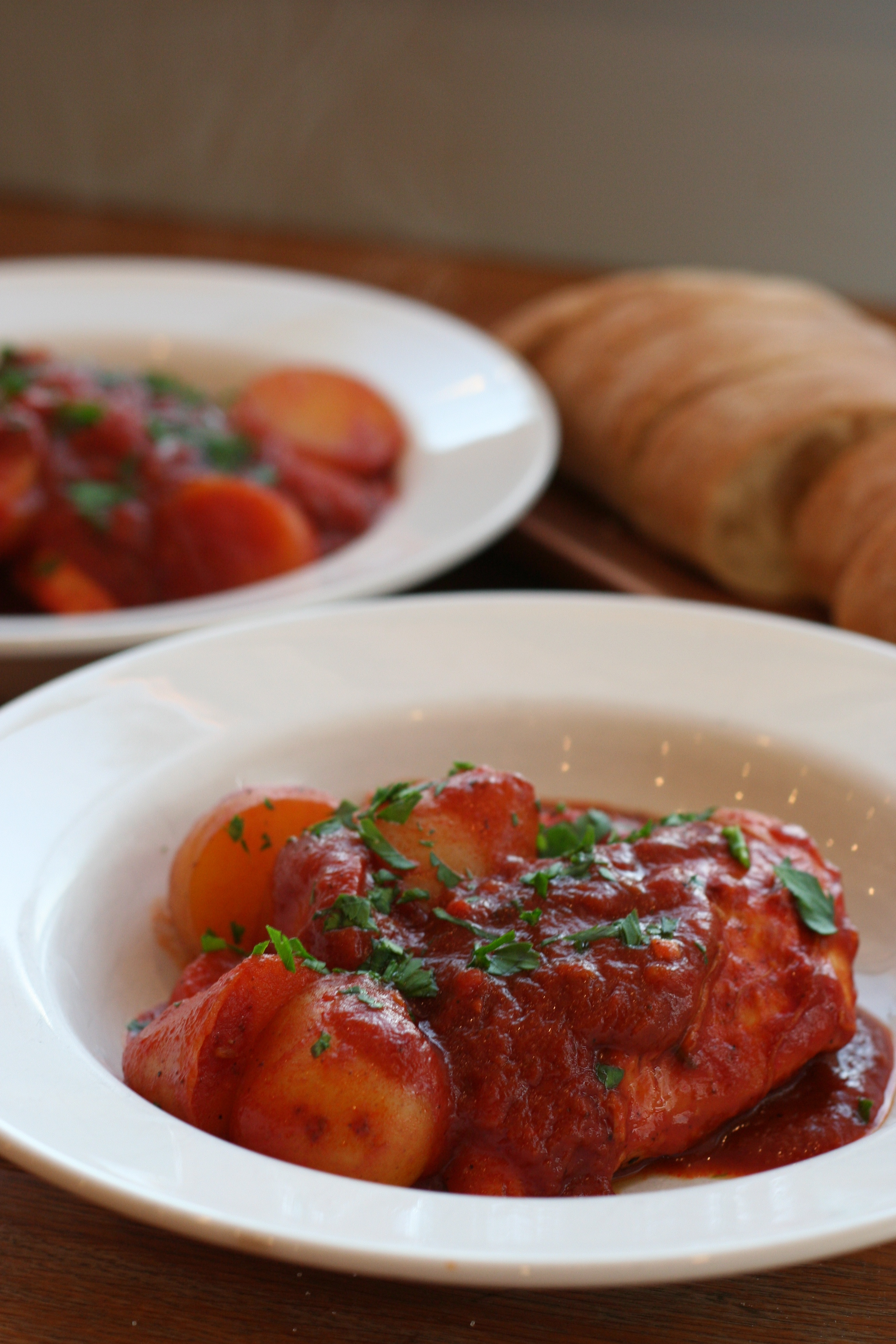
Chicken Bouillabaisse

One-pot dinners are so popular that entire cookbooks are dedicated to them. The renowned Ballymaloe Cookery School in Ireland even offers a one-day course on them. Their appeal is obvious — they tend to be easy to cook, only using one pot means there’s less washing up to do, you can let them simmer away while you get on with other things, and they’re ideal for cooking for a crowd. This chicken bouillabaisse is straightforward enough to make as a weeknight meal, yet impressive enough to serve for company. The bright fennel flavors in this stew make for a nice change, especially as we’re coming into spring and cravings for heavy foods are waning. I also love the lurid red sauce, which you’ll want to mop up with plenty of crusty bread. As one-pot wonders go, this is one of my favorites (plus it’s always more fun to cook something with a French name).

Chicken Bouillabaisse
adapted from Barefoot Contessa Back to Basics by Ina Garten

Serves 4 to 6

I’ve adapted this quite a bit from the original, most notably by adding in onions, fennel and carrots and cooking it on the stovetop instead of in the oven. It’s traditional to serve bouillabaisse with a dollop of rouille and Ina Garten has a recipe for one here, though truth be told I usually skip it. You could make a cheat’s version by adding 1 tablespoon freshly squeezed lemon juice, 1/2 teaspoon saffron and 1/4 teaspoon crushed red pepper flakes to 1 cup (240 ml) good store-bought mayonnaise. I’ve listed the Pernod as optional because there’s no need to go out and buy a whole bottle just for 3 tablespoons, and the dish is perfectly delicious without it.

5 large chicken breasts (or a combination of breasts and thighs), either left whole or cut into bite-sized pieces
salt and freshly ground black pepper
1 tablespoon minced fresh rosemary leaves
2 tablespoons extra virgin olive oil
2 large onions, roughly chopped
1 fennel bulb, roughly chopped
3 or 4 carrots, cut into 1‑inch pieces on the diagonal
4 large cloves garlic, finely chopped
1 teaspoon saffron
1 teaspoon whole fennel seeds
11 oz (300 g) tomato puree
2 cups (480 ml) good-quality chicken stock
1 cup (240 ml) dry white wine
3 tablespoons Pernod (optional)
1 lb (450 g) baby potatoes, halved
handful of fresh parsley, chopped, to garnish
crusty bread, to serve

Pat the chicken dry with paper towels and season it generously with salt, pepper, and the rosemary. Heat the olive oil over a medium heat in a large pot and brown the chicken in batches (don’t crowd the pot) until nicely browned all over, about 5 to 7 minutes per batch. Transfer the browned chicken to a plate and set aside.

Lower the heat to medium-low and the onion, fennel and carrots. Saute for 10 minutes, until the onions have softened. Add the garlic and saute for 1 minute more. Add the saffron, fennel seeds, tomato puree, chicken stock, white wine, Pernod, 2 teaspoons salt, and 1 teaspoon of pepper to the pot. Stir and scrape up any browned bits on the bottom. Add the browned chicken and their juices back to the pot, along with the baby potatoes.

Cover the pot and simmer for 45 to 55 minutes, until the potatoes are tender (but not falling apart) and the chicken is done. Check the seasoning, then add a dash of Pernod or a splash of white wine at the end if you think it could use a little alcohol edge. Serve hot in shallow bowls with big dollops of rouille (if using), some chopped fresh parsley sprinkled over and plenty of crusty bread to mop up the sauce.

Coq au Vin and Gâteau au Chocolat Fondant de Nathalie

Don’t be intimidated by this post’s fancy name — I could have just called it chicken in wine and chocolate mousse cake, but where’s the fun in that? I had a Francophile friend over for lunch the other day, so decided it was as good a time as any to make the Barefoot Contessa version of coq au vin that I’ve been wanting to try. And after being very good for all of January and not baking a single thing, I undid all my efforts and made this cake. But oh, such a cake. It’s one of my top two favorite cakes (Beatty’s chocolate cake is the other). Fudgy, smooth and intense, it was worth every previously forsaken calorie.

This is a great menu for entertaining because you can make both dishes in advance. In fact, the cake gets even better after a day or two. It’s also incredibly easy to make — just melt the chocolate and butter together, then stir in all the rest of the ingredients in the same bowl (you can watch Trish Deseine herself making it to see just how easy it is). You often hear that you should use the best-quality ingredients you can find, but it’s particularly true for this cake. I used Green & Black’s organic chocolate, organic eggs and Lurpak butter from Denmark.

Ina Garten suggests serving the coq au vin with garlic mashed potatoes, but I wanted to make things easier on myself and so just served it with a good store-bought crusty bread instead. I also served a green salad with balsamic vinaigrette and a plate of Brie and Roquefort. There are few better ways to spend an afternoon than with a good friend, good conversation and a table full of good food.

Coq au Vin
adapted from Back to Basics by Ina Garten

If you can’t find frozen small whole onions and don’t want to bother with peeling small shallots, just use 2 yellow onions instead of the 1 called for at the start of the recipe. And if you don’t have a Dutch oven, simmer the coq au vin on the stovetop for 45 minutes to 1 hour instead.

2 tablespoons olive oil
4 oz (110 g) bacon or pancetta, diced
1 x 3 to 4‑lb (1.4 to 1.8 kg) chicken, cut into eighths (or use an equal weight of chicken breasts and thighs)
kosher salt and freshly ground black pepper
1/2 lb (225 g) carrots, cut diagonally in 1‑inch pieces
1 yellow onion, sliced
2 teaspoons salt
1 teaspoon freshly ground black pepper
1 teaspoon chopped garlic
1/4 cup (60 ml) Cognac or good brandy
1/2 bottle (375 ml) good dry red wine such as Burgundy
1 cup (240 ml) good-quality chicken stock
10 fresh thyme sprigs
2 tablespoons unsalted butter, at room temperature, divided
1 1/2 tablespoons all-purpose flour
1/2 lb (225 g) frozen small whole onions (or small peeled shallots*)
1/2 lb (225 g) cremini mushrooms (button mushrooms will also work fine), stems removed and thickly sliced

*Note: To peel shallots easily, drop them into a pot of boiling water for less than 1 minute. Drain, then slip off the skins.

Preheat the oven to 250°F (120°C).

Heat the olive oil in a large Dutch oven. Add the bacon and cook over medium heat for 8 to 10 minutes, until lightly browned. Remove the bacon to a plate with a slotted spoon.

Meanwhile, lay the chicken out on paper towels and pat dry. Liberally sprinkle the chicken on both sides with salt and pepper. When the bacon is removed, brown the chicken pieces in batches in a single layer for about 5 minutes, turning to brown evenly. Remove the chicken to the plate with the bacon and continue to brown until all the chicken is done. Set aside.

Add the carrots, onions, salt and pepper to the pan and cook over medium heat for 10 to 12 minutes, stirring occasionally, until the onions are lightly browned. Add the garlic and cook for 1 more minute. Add the Cognac and put the bacon, chicken, and any juices that collected on the plate into the pot. Add the wine, chicken stock, and thyme and bring to a simmer. Cover the pot with a tight-fitting lid and place in the oven for 30 to 40 minutes, until the chicken is just not pink (or simmer on the stovetop for 45 minutes to 1 hour). Remove from the oven and place on top of the stove.

Mash 1 tablespoon of butter and the flour together and stir it into the stew to thicken it. Add the frozen onions (if using peeled shallots, saute them along with the mushrooms in the next step before adding to the stew). In a medium saute pan, add the remaining 1 tablespoon of butter and cook the mushrooms over a medium-low heat for 5 to 10 minutes, until browned. Add to the stew. Bring the stew to a simmer and cook for another 10 minutes. Season to taste and serve hot.

***

Gâteau au Chocolat Fondant de Nathalie
adapted from Je veux du chocolat! by Trish Deseine (recipe via Orangette and RTÉ)

This cake is even better on the second day, so consider making it the day before serving. Molly Wizenberg at Orangette says this cake is also suitable for freezing, and even improves in texture and flavor after a week or two in the freezer.

7 oz (200 g) best-quality dark chocolate
1 tablespoon double-strength espresso or 1 teaspoon instant espresso powder (optional)
7 oz (200 g) best-quality unsalted butter, cut into 1/2‑inch cubes
1 1/4 cups (250 g) sugar
5 large eggs
1 tablespoon all-purpose flour
confectioners’ (icing) sugar, to dust (optional) (or you could use Trish’s chocolate glaze, recipe here)

Preheat the oven to 375°F (190°C) and butter and flour an 8‑inch round cake pan or springform tin (which is what I prefer, since you don’t have to turn it out).

Finely chop the chocolate and place it, along with the coffee, in a double boiler or in the microwave, stirring regularly (every 30 seconds if using a microwave). Once the chocolate has melted, add the butter, stirring until it too has melted. Add the sugar to the chocolate-butter mixture, mixing well, and set aside to cool for a few moments. Add the eggs one by one, beating well with a wooden spoon after each addition, then add the flour. The batter should be smooth and dark. If you can see fat still floating on the surface or if the mixture looks at all grainy, switch to a whisk and beat lightly until smooth.

Pour the batter into the prepared cake pan and bake for 20 to 25 minutes, until the center of the cake barely trembles when the pan is shaken (the cake should be very moist in the middle) and the top is a bit crackly looking. Let the cake cool completely in the tin before you turn it out, then revert it so that the crackly side is facing upward. Dust with icing sugar or spread with the chocolate glaze and serve at room temperature.

Casserole Provençale and Crunchy Chocolate Bakewell Tart

We’re excited to announce our first giveaway at Dinner du Jour! Thanks to Gill & Macmillan, I have a copy of From Brenda’s Kitchen: 100 Favourite Recipes by Brenda Costigan to give away* to a reader.

Brenda Costigan is one of Ireland’s most renowned cookery writers. A weekly food columnist for the Sunday Independent Life magazine, she has also written three other bestselling cookbooks. This book, written with busy families in mind and suitable for cooks of all abilities, features some of the most popular recipes from her column as well as many new favorites.

To be in with a chance of winning From Brenda’s Kitchen: 100 Favourite Recipes, just leave a comment in this post telling us what some of your favorite recipes are. The competition will close at 12:00 (Irish time) on Monday, November 9th and a winner will be chosen randomly from the comments.

brenda cover

Casserole Provençale
adapted from From Brenda’s Kitchen: 100 Favourite Recipes by Brenda Costigan

Serves 5 to 6

Brenda says you shouldn’t hold back on the olives, as they give a wonderful flavor to the finished dish. It’s also preferable to use fresh herbs rather than dried here.

for the marinade:
1 1/4 cups (300 ml) red wine
1/4 cup (60 ml) brandy (optional)
sprigs of fresh thyme
sprigs of fresh rosemary
2 bay leaves
2 cloves garlic, chopped
salt and freshly ground black pepper

for the casserole:
2 1/4 lb (1 kg) stewing beef, cut into generous bite-sized chunks
4 tablespoons olive oil
1 rounded tablespoon flour
7 oz (200 g) rashers or bacon, chopped (Brenda likes to use smoked rashers/bacon)
2 large onions, sliced
2 cloves garlic, chopped
6 oz (170 g) button mushrooms, halved
2 large carrots, peeled and sliced
3 to 5 oz (75 to 150 g) pitted black or green olives
1 x 14-oz (400‑g) can of chopped tomatoes
1 3/4 cups (400 ml) hot beef stock
salt and freshly ground black pepper

Put all the marinade ingredients into a bowl and stir well to combine. Add in the beef and mix well. Cover with clingfilm and allow to marinate in the fridge for a few hours. Stir once or twice if you think of it.

Preheat the oven to 325°F (160°C).

Lift the meat out of the marinade with a slotted spoon (keep the marinade). Pat the meat dry with paper towels and fry in small batches until browned in the olive oil, then transfer to a casserole or heavy saucepan. Add the flour to the browned meat and toss together. Fry the rashers until golden and add to the meat.

Lightly brown the onions in the pan. Add the garlic and then the mushrooms, then add this onion mixture to the casserole. Add the carrots, olives and tomatoes to the casserole.

Pour the marinade, including the herbs, into the pan the meat etc. was browned in and bring to the boil, making sure to scrape up all the bits on the bottom of the pan. Boil for 1 to 2 minutes to reduce the amount of liquid a bit and to intensify the flavor. Add the beef stock and simmer for a few minutes to heat it up, then pour the hot liquid directly into the casserole. The liquid should just about cover the meat and vegetables. Add very little salt, if any, because the rashers and olives are already salty. Add freshly ground black pepper and stir everything together. If necessary to make the lid fit more snugly, cover the casserole with a layer of baking parchment or tinfoil, then put on the lid (this helps to prevent evaporation).

Cook in the oven for 2 1/2 to 3 hours, or until the meat is really tender. Discard the sprigs of fresh herbs before serving. Serve with mashed potatoes or boiled potatoes and a green vegetable of your choice.

***

Crunchy Chocolate Bakewell Tart
adapted from From Brenda’s Kitchen: 100 Favourite Recipes by Brenda Costigan

Serves 8

Brenda says this tart is one of her favorites — rich and moist, it keeps for up to 2 weeks. Brenda has used a base of crushed digestives and butter instead of the more traditional pastry base. For a touch of luxury, serve the tart with the fruits of the forest sauce (or 12 oz (340 g) mixed fresh summer berries) and some whipped cream.

Note: If the baking tin sizes recommended here aren’t adhered to, the cakes may be thicker (if smaller) or thinner (if larger), which can affect the cooking times.

for the crushed biscuit base: 
7 oz (200 g) digestive biscuits, crushed (or you can substitute graham crackers)
1/2 cup (110 g) butter, melted

for the filling: 
4 to 5 tablespoons blackcurrant jam, softened (not fridge cold)
3/4 cup (170 g) butter, softened
3/4 cup (150 g) sugar
3 large eggs
1/2 teaspoon almond extract
3 1/2 oz (100 g) chopped blanched almonds
3 1/2 oz (100 g) ground almonds
5 oz (150 g) dark chocolate, melted and partly cooled
small handful of flaked almonds

for the fruits of the forest sauce:
juice of 1 large orange
12 oz (340 g) frozen fruits of the forest or summer fruits
1/4 to 1/3 cup (50 to 75 g) sugar
1 heaped teaspoon cornflour

3/4 cup (175 ml) lightly sweetened whipped cream, to serve

You will also need a springform tin 9 inches in diameter

Preheat the oven to 375°F (190°C).

To make the biscuit base, mix the crushed biscuits and melted butter together and spread in an even layer over the base of the tin, pressing the mixture down firmly. Bake in the oven for about 5 minutes, just to lightly crisp the biscuits. There will be no change in the appearance. Stand the tin on a wire tray to cool while you prepare the filling.

Reduce the oven to 325°F (170°C).

To make the filling, place the jam in a small bowl and stir briskly with a spoon in order to make it looser and more spreadable. Spread the jam carefully in a thin layer over the cooled biscuit base, leaving a 1‑inch margin all the way around. This is to ensure that the jam doesn’t ooze out at the edges and get too highly baked on the sides, spoiling the appearance of the finished cake.

Beat the butter and sugar together in a bowl until soft. Add in the eggs, one at a time, and almond extract and beat well. Mix together the chopped almonds and the ground almonds and stir into the butter/sugar mixture, then stir the melted chocolate through. Pour into the tin over the biscuit base and scatter the flaked almonds over the surface.

Bake for about 40 minutes –- start at the higher temperature and lower if halfway through if the tart is cooking too quickly. It’s ready when the almond mixture has become set on the outside but is still slightly wobbly in the center. Stand the tin on a wire tray for about 15 minutes to allow it to cool. With a sharp knife, loosen the edges, then release the spring clip sides of the tin and leave the tart to cool completely.

To make the sauce, put the orange juice and frozen berries into a saucepan. Cook gently to thaw, then add the sugar and stir to dissolve. Blend the cornflour with a dribble of water and some of the hot liquid from the saucepan. Mix well, then stir the cornflour mixture into the berries in the saucepan. Bring to the boil, stirring to thicken. If a thicker consistency is required, more cornflour can be added (in the same way). Taste for sweetness.

To serve, carefully slide the tart off the base of the tin onto a serving plate. Serve each slice topped with the fruits of the forest sauce (or fresh berries) and some whipped cream.

*In the interests of full disclosure, I was involved with the production of this book and the publishers, Gill & Macmillan, generously gave me a copy to give away here.

Late-summer Roast Beef Dinner and French Apple Tart

Nigella Lawson’s How to Eat: The Pleasures and Principles of Good Food is one of the bibles of modern-day cookbooks. It’s also one of the first cookbooks I bought in Ireland, and has taught me how to make things I’d never even heard of before moving abroad, like Yorkshire pudding and trifle. It also spells out the makings of something else that was completely foreign to me: a proper Sunday lunch. Nigella Lawson writes about it for four straight pages in How to Eat, but what sums it up rather romantically is this: “Sunday lunch … is about solidity, the family, the home.”

Sunday lunch is an institution in a lot of families, but it took me a long time to come around to its charms, especially since I’m the one doing all the cooking that goes into a big Sunday lunch, not my mother. In my case, I like to have our big meal as a late lunch at the weekends now simply because my kids are in better moods at that time of day, which not only means they’re more likely to eat what I put in front of them, but makes for a more pleasant dinner for all of us. Plus now that my daughter needs a packed lunch every day for school, a roast does double duty as Sunday’s dinner and Monday’s sandwich.

Strictly speaking, this menu isn’t a traditional Sunday lunch — there’s no roast potatoes, or the vegetables like carrots, parsnips or broccoli that you’d usually expect. But one of the things I love about How to Eat is that it contains lots of ready-to-go menus, not just stand-alone recipes, and this is Nigella’s late-summer roast beef menu from the “Weekend Lunch” chapter (though I made the French apple tart instead of the Yorkshire pudding with syrup and cream she calls for, and I also prefer Bon Appétit’s one-pot version of the cannellini beans with garlic and sage for being easier and more straightforward than Nigella’s recipe). After holding out all month, it’s finally time to embrace autumn, and this dinner seemed like a good compromise.

It’s National Organic Week in Ireland! Click here for a listing of events throughout the country.

Cold Roast Fillet of Beef 
from How to Eat by Nigella Lawson

Serves 8

fillet of beef — allow about 7 oz (200 g) per person
olive oil

Allow the beef to come to room temperature before you cook it (otherwise the cooking times here won’t be correct).

Preheat the oven to 480°F (250°C). If it’s possible to switch off the fan in your oven, do so in order to reduce evaporation (75% of lean meat is water, so fan ovens can make even good cuts of meat dry and tough).

Place the fillet in an ovenproof dish or roasting tray. Rub the beef all over with olive oil. (Nigella advises using a rosemary-infused oil for this menu, but plain olive oil works just fine too.)

Cook the beef for 15 minutes at the very high heat, then reduce the oven to 350°F (180°C). Cook the beef for 15 minutes per 18 oz (500 g) for rare; 18 minutes per 18 oz (500 g) for medium; and 25 minutes per 18 oz (500 g) for well done.

After the meat has had its advised cooking time, test it: either press it (if it feels soft it’s rare, bouncy it’s medium, hard it’s well-done) or pierce it with a knife to see. Always let any meat rest out of the oven for at least 10 minutes before carving.

If you’re cooking the beef ahead of time, take it out of the fridge 2 hours before you want to eat it. It should be cold, but not chilled. Or you could cook the fillet early enough in the day to simply allow it to cool to room temperature by the time you want to eat.

***

Rosemary and Anchovy Mayonnaise

1 cup (240 ml) mayonnaise
8 anchovy fillets in oil, drained and diced
1 sprig rosemary, finely chopped
1 tablespoon lemon juice
salt and freshly ground black pepper

Combine all the ingredients, mixing well. Chill until ready to serve. Serve alongside the beef. (This is also great to make sandwiches with the beef leftovers.)

***

Cannellini Beans with Garlic and Sage 
from Bon Appétit, October 2009

Makes about 6 cups

1 lb (450 g) dried cannellini beans
8 cups (2 liters) room-temperature water
2 tablespoons olive oil
1 large head of garlic, unpeeled, top 1/2 inch cut off to expose cloves
1 large sprig of fresh sage
1/4 teaspoon whole black peppercorns
1 teaspoon coarse kosher salt
extra virgin olive oil (for drizzling)

Place the beans in a large bowl. Cover with cold water (at least 6 cups/1 1/2 liters) and soak overnight.

Drain the beans and place in a heavy, large pot. Add the 8 cups (2 liters) of room-temperature water, olive oil, garlic, sage, and black peppercorns. Bring to a simmer over a medium-high heat. Reduce the heat to medium-low and simmer, uncovered, for 1 1/2 hours, stirring occasionally. Mix in the coarse salt. Continue to simmer until the beans are tender, adding more water if needed to keep beans covered, about 30 minutes longer. Cool the beans in the cooking liquid for 1 hour.

Using a slotted spoon, transfer the beans to a serving bowl, reserving the bean cooking liquid, if desired, but discarding the garlic, sage, and peppercorns. Season the beans to taste with pepper and more coarse salt. Drizzle with extra virgin olive oil and serve.

***

Tomato Salad
from How to Eat by Nigella Lawson

For this salad, simply slice some tomatoes (the best and ripest you can find) and arrange them on a plate. Sprinkle with salt, pepper and sugar (only if you think they need it, and even so, just a pinch), as well as some finely chopped spring onions or chives, a drop or two of balsamic or red wine vinegar, and a drizzle of extra virgin olive oil.

***
french apple tart

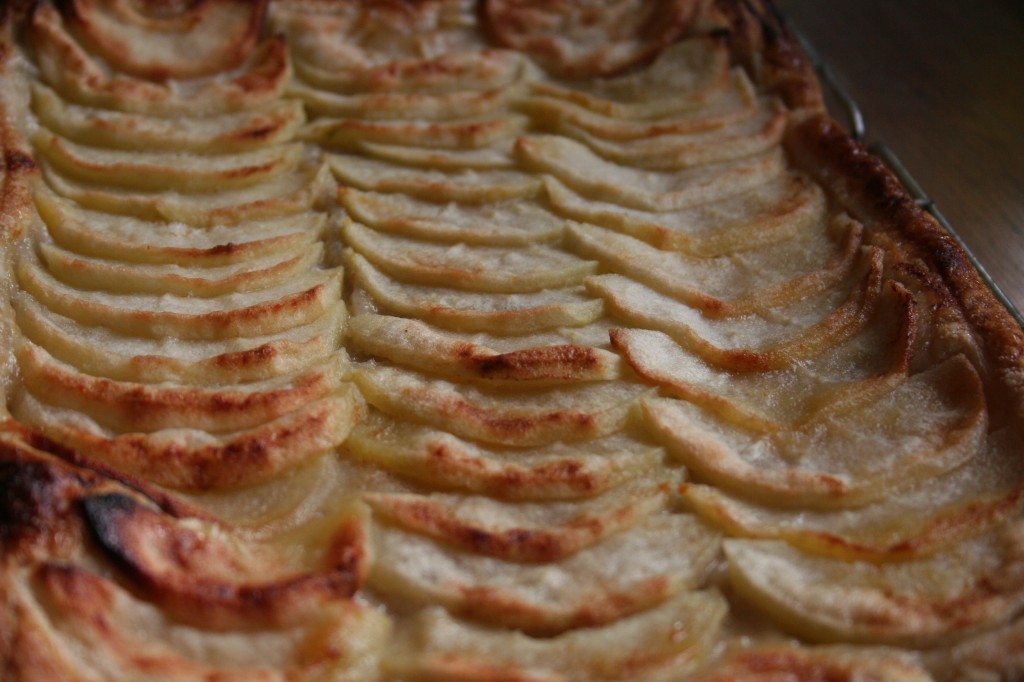
French Apple Tart (or Tarte Fine Aux Pommes, as Nigella Lawson calls it)
adapted from Barefoot Contessa Back to Basics by Ina Garten and Nigella Express by Nigella Lawson

Serves 4 to 6

This is mostly Nigella’s recipe, but the apricot jam and Calvados brushed on top is Ina’s touch from her version. The tart will still be delicious if you don’t add the jam mixture though. I pulled this together in 10 minutes, so it would also be a quick weeknight treat.

1 sheet shop-bought ready-rolled puff pastry, defrosted if frozen
2 large Granny Smith apples
2 tablespoons sugar
2 tablespoons (30 g) cold unsalted butter, small diced
1/4 cup (60 ml) apricot jam
2 tablespoons Calvados, rum, or water

Preheat the oven to 400°F (200°C). Line a sheet pan with parchment paper.

Lay the sheet of puff pastry on the lined baking sheet. Using the tip of a sharp knife, mark a 1/2‑inch border all the way around the edge of the rectangle. You need to score the lines on the pastry rather than cut all the way through it. This will allow a frame to rise above the apple filling. Refrigerate the dough while you prepare the apples.

Peel the apples and core them, then cut them in half. Slice the apples into 1/4‑inch-thick slices. Working from the inside edge, place the apple slices, closely overlapping, within the border of the pastry frame. Create neat lines of apple slices until the pastry is covered. Sprinkle with the sugar and dot with the butter.

Bake for 20 to 25 minutes, until the pastry is browned and the edges of the apples start to brown. Rotate the pan once during cooking. If the pastry puffs up in one area, cut a little slit with a knife to let the air out. And don’t worry if the apple juices burn in the pan, the tart will be fine. When the tart’s done, gently heat the apricot jam together with the Calvados, rum, or water and brush the apples and the pastry completely with the jam mixture. Loosen the tart with a spatula so it doesn’t stick to the paper. Allow to cool and serve warm or at room temperature, cut into squares or slices.