Tag Archives: Grains and pulses

Pumpkin Seed and Panko-crusted Salmon with Quinoa-stuffed Squash

We’re still eating pumpkin seeds from last week’s Halloween pumpkin carvings. They’re a great snack when roasted and salted and also lend a nice nuttiness to savory dishes. As you can tell by the side dish, our quinoa obsession continues. This dish was tasty when paired with the salmon but would also make a lovely vegetarian main course, too. It may be my favorite quinoa dish yet.

Pumpkin Seed and Panko-crusted Salmon

Serves 6

6 x 6‑oz (170‑g) boneless salmon fillets
salt and pepper, to taste
1/2 cup (30 g) roasted and salted pumpkin seeds
1 cup (60 g) panko breadcrumbs
1/2 teaspoon dried thyme
1/2 teaspoon chili powder
2 tablespoons olive oil or melted butter
1 tablespoon mayonnaise

Preheat the oven to 425°F (220°C). Line a baking sheet with parchment paper. Lay each piece of salmon, skin side down, on the lined baking sheet and season with salt and pepper, to taste.

Process the pumpkin seeds in a food processor to a fine breadcrumb consistency. Sift the processed seeds through a large mesh strainer to remove any husks that did not process. Blend the processed seeds with the panko, spices and olive oil or butter, mixing to coat the crumbs evenly with the oil or butter.

Brush the top of each fillet with 1/2 teaspoon of mayonnaise. Spoon the pumpkin seed mixture on top of the salmon fillets, patting down to adhere the mixture to the fish. Roast in the preheated oven for about 10 minutes, until the salmon begins to flake. Remove the salmon from the oven and let rest for 5 minutes before serving.

***

Quinoa-stuffed Squash
adapted from Rare Earth Farm newsletter, October 29, 2009

Serves 6 as a side dish, 3 as a main course

3 carnival or acorn squash
3 tablespoons olive oil, divided
salt and freshly ground black pepper, to taste
1 1/2 cups (350 ml) broth
1 cup (170 g) quinoa, rinsed
1/2 cup (60 g) raisins
1/2 cup (50 g) slivered almonds, lightly toasted
1 onion, minced
1/2 teaspoon cinnamon (or 1 cinnamon stick)
1 cup (110 g) shredded Gruyere cheese

Preheat the oven to 375°F (190°C). Cut the squash in half and remove the seeds. (I use a grapefruit spoon to easily remove the seeds and membranes.) Coat the inside of each squash half lightly, using about 2 tablespoons of olive oil. Season the squash with salt and pepper. Put the squash in a roasting pan, cut side down, and fill the pan with 1/4 inch of water. Roast the squash for 25 to 30 minutes, until just tender.

While the squash roasts, heat the broth to a boil, then stir in the quinoa and raisins and cook, covered, until the broth is absorbed. The quinoa will be al dente, not soft. While the quinoa cooks, toast the almonds in a small skillet. Pour the almonds onto a plate to cool. Saute the onion along with the cinnamon in the same skillet for about 10 minutes, until translucent. When the quinoa is done, mix in the almonds and half the cheese, and the onions. The squash should be nearly done at this point — a knife should enter the flesh easily and the water should have evaporated. Remove the roasting pan from the oven and fill each squash half with the quinoa stuffing. Top each half with the remaining cheese. Bake for 5 minutes, until the cheese melts.
Pumpkin, Feta and Cilantro Quesadillas and Lentil-Rice Salad with Chorizo

Sitting down to think about what to say about pumpkins, the first thing that popped into my head was the time my dad took me to the record store at the mall for my sixteenth birthday and let me pick out a CD as a present. I chose Siamese Dream by The Smashing Pumpkins, which back then was a cool new album. “Smashing … Pumpkins?” he said slowly. “What the heck kind of a name for a band is that?” No doubt I answered by just rolling my eyes. Fast forward another sixteen years, and instead of buying alternative CDs, I’m buying tickets at my daughter’s school for a pumpkin they’re raffling off as a fundraiser. How times change.

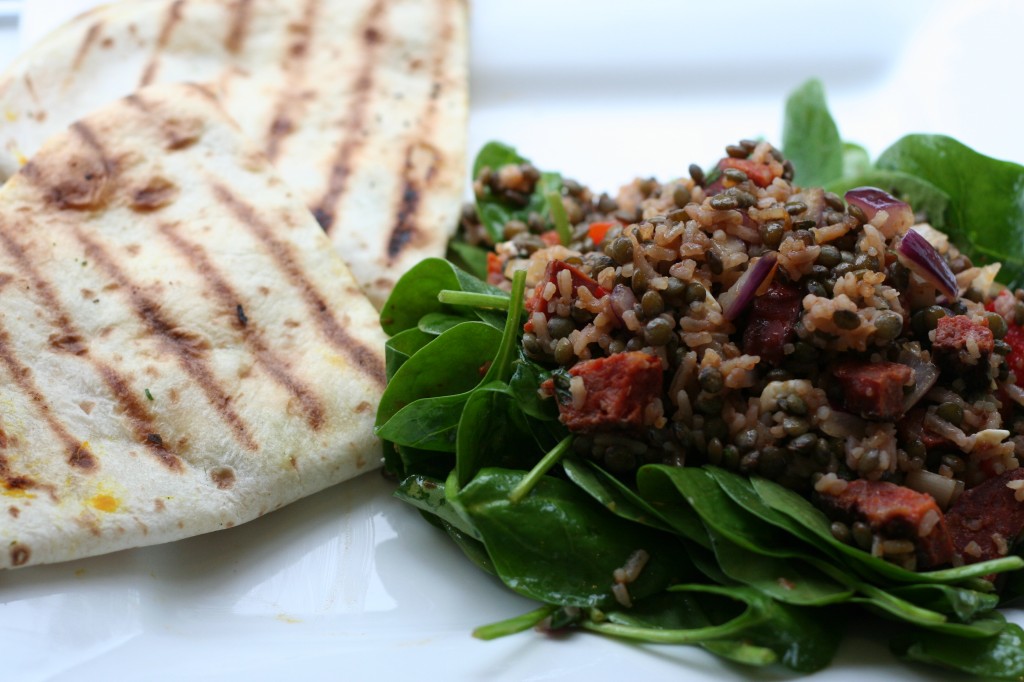
pumpkin quesadillas with lentil-rice salad

Pumpkin, Feta and Cilantro Quesadillas 
adapted from Bon Appétit, October 2009

Serves 6

1 lb (450 g) peeled and deseeded sugar pumpkin or butternut squash, cut into 1 1/2‑inch cubes (about 3 cups)
1 jalapeño, deseeded and finely chopped (about 2 tablespoons)
salt and freshly ground black pepper
12 x 8‑inch-diameter flour tortillas
10 oz (280 g) feta cheese, crumbled
1 1/2 cups (45 g) coarsely chopped fresh cilantro
2 limes, each cut into 6 wedges

Cook the pumpkin or squash in a large saucepan of boiling salted water until tender but not falling apart, about 10 minutes. Drain and cool for 10 minutes. While the pumpkin is still warm, transfer to a food processor or blender and puree until smooth. Stir in the jalapeño and season with salt and pepper.

Divide the pumpkin mixture equally among 6 tortillas (about 1/4 cup (60 ml) per tortilla) and spread it evenly across the tortilla. Sprinkle feta over each tortilla. Top each with 1/4 cup (10 g) cilantro and sprinkle with black pepper. Top with the second tortilla.

Heat a heavy, large griddle or skillet over a medium-high heat. Cook the quesadillas until golden and dark char marks appear, about 1 minute per side. Serve with lime wedges.

***

Lentil-Rice Salad with Chorizo
adapted from Mexican Everyday by Rick Bayless

Serves 4

for the dressing:
2 oz (60 g) chorizo, casing removed
2 cloves garlic, finely chopped
2/3 cup (160 ml) vegetable oil, olive oil or a mixture of the two
1/4 cup (60 ml) apple cider vinegar
1 teaspoon oregano

for the salad:
2/3 cup (200 g) Puy or brown lentils (not red or yellow, as these will fall apart during cooking)
1/2 cup (90 g) rice (long-grain rice makes the fluffiest salad)
1 tablespoon salt
1 small red onion, thinly sliced
4 oz (110 g) chorizo or good-quality ham, cut into 1/4‑inch cubes
1 red bell pepper, roasted, peeled and sliced
4 oz (110 g) baby spinach

First, make the dressing. Place the chorizo in a small skillet and set over a medium heat. Cook, stirring and breaking up clumps, until the sausage is browned and cooked through, 8 to 10 minutes. Add the garlic and stir for 1 minute, then remove from the heat.

Transfer the chorizo and garlic into a screw-top jar. Add the oil, vinegar and oregano, secure the lid and shake until smooth. Taste and season with salt if you think it needs it (Rick Bayless recommends 1/2 teaspoon). Refrigerate until ready to use. Shake well immediately before dressing a salad. If you want to use this as a warm dressing (as is common for spinach salad), microwave uncovered for 15 to 20 seconds, secure the lid and shake again.

To make the salad, pour about 2 quarts (2 liters) of water into a large pot and set over a high heat. Add the salt. When the water boils, add in the lentils and rice. Reduce the heat slightly, but keep the water at a brisk boil and cook until the lentils and rice are tender (no chalkiness inside) but show no signs of falling apart, about 15 minutes. Pour into a strainer set in the sink to drain completely.

Scoop the lentil-rice mixture into a very large bowl, along with the red onion. Pour in about 1/4 cup (60 ml) of the dressing and mix well. Add the chopped chorizo or ham and red pepper to the lentils and toss to combine. Season to taste.

Scoop the spinach into a large bowl. Shake the dressing throughly to blend, then drizzle on about 3 tablespoons and toss to combine. (Save the rest of the dressing for another salad.) Divide the salad among 4 plates, roughly forming it into nests. Scoop a portion of the lentil salad into the center of each and serve.


Blue Cheese-stuffed Mushrooms, Sage Roasted Chicken, and Quinoa with Beets and Goat’s Cheese

Poor Reuben and Sam had to test out three of my concoctions tonight. I picked out some “real” recipes earlier in the week but decided to use up as much wilting produce in my fridge as possible instead. I don’t normally make an appetizer for a weeknight dinner, but what else can you do with a small wedge of very ripe blue cheese except stuff it in some mushrooms? I won’t say these are the finest recipes I ever created, but together they made for a satisfying dinner.

Blue Cheese-stuffed Mushrooms

Makes about 14 to 16 mushrooms

1 lb (450 g) white mushrooms
1/2 cup (25 g) fresh breadcrumbs
1/2 teaspoon garlic powder
1/4 teaspoon onion powder
1 1/2 oz (45 g) blue cheese
4 tablespoons olive oil or melted butter
salt and freshly ground black pepper, to taste

Preheat the oven to 375°F (190°C). Wash the mushrooms quickly under running water and dry them. Remove the stems from the mushroom caps. Using your hands, gently combine the remaining ingredients in a medium bowl. Stuff each mushroom cap with the filling. Bake for about 15 minutes, until mushrooms are tender and the breadcrumbs are golden. Serve hot.

***

Sage Roasted Chicken

Serves 4 to 6

1 x 3–4 lb (1.4 to 1.8 kg) whole chicken
olive oil or melted butter
salt and freshly ground black pepper
1 small bunch fresh sage

Preheat the oven to 400°F (200°C). Wash the chicken inside and out, then dry well. Rub the skin with olive oil or melted butter. Season generously, inside and out, with salt and pepper. Place 10 to 12 sage leaves under the skin of the chicken. Stuff the remaining sage inside the chicken cavity.

Place the chicken, breast down, on a roasting rack and set in a baking dish. Roast at 400°F (200°C) for about 20 minutes. Flip the chicken breast side up and continue roasting for another 20 minutes, until the skin takes on some color. Turn the oven down to 350°F (180°C) and continue roasting for another 20 to 40 minutes, depending on the size of the chicken. When done, the leg will move easily away from the body of the chicken and juices will run clear when the thigh is pierced. Let the chicken rest for 5 to 10 minutes before carving.

***

Quinoa with Beets and Goat’s Cheese

Serves 6

1 lb (450 g) beets, trimmed
8 tablespoons olive oil, divided
1 cup (170 g) quinoa
4 cups (1 liter) water
2 teaspoons salt, divided
2 oz (60 g) goat’s cheese, crumbled
1 shallot, minced
3 tablespoons sherry vinegar
1 teaspoon Dijon mustard
freshly ground black pepper, to taste

Preheat the oven to 400°F (200°C). Toss the beets in 3 tablespoons of olive oil, then wrap in aluminum foil. (I usually place 2 to 3 beets in each foil packet.) Roast until tender, 60 to 90 minutes, depending on the size of the beets. Remove from the oven and allow to cool for 15 to 20 minutes before peeling and quartering the beets. If the beets are very large, cut into 1‑inch pieces instead of quartering them.

Bring 4 cups (1 liter) of water to boil. Stir in the quinoa and salt to the boiling water. Cook the quinoa until tender, about 20 minutes. Drain and rinse under cold water. Place in a serving bowl.

In small bowl, whisk together the shallot, vinegar, mustard, remaining salt and freshly ground black pepper. Whisk in the remaining 5 tablespoons of olive oil. Stir the vinaigrette and quinoa together. Fold in the beets and crumbled goat’s cheese. Serve warm or at room temperature.

Sicilian Lamb Patties Braised with Eggplant, Peppers, and Tomatoes with Polenta

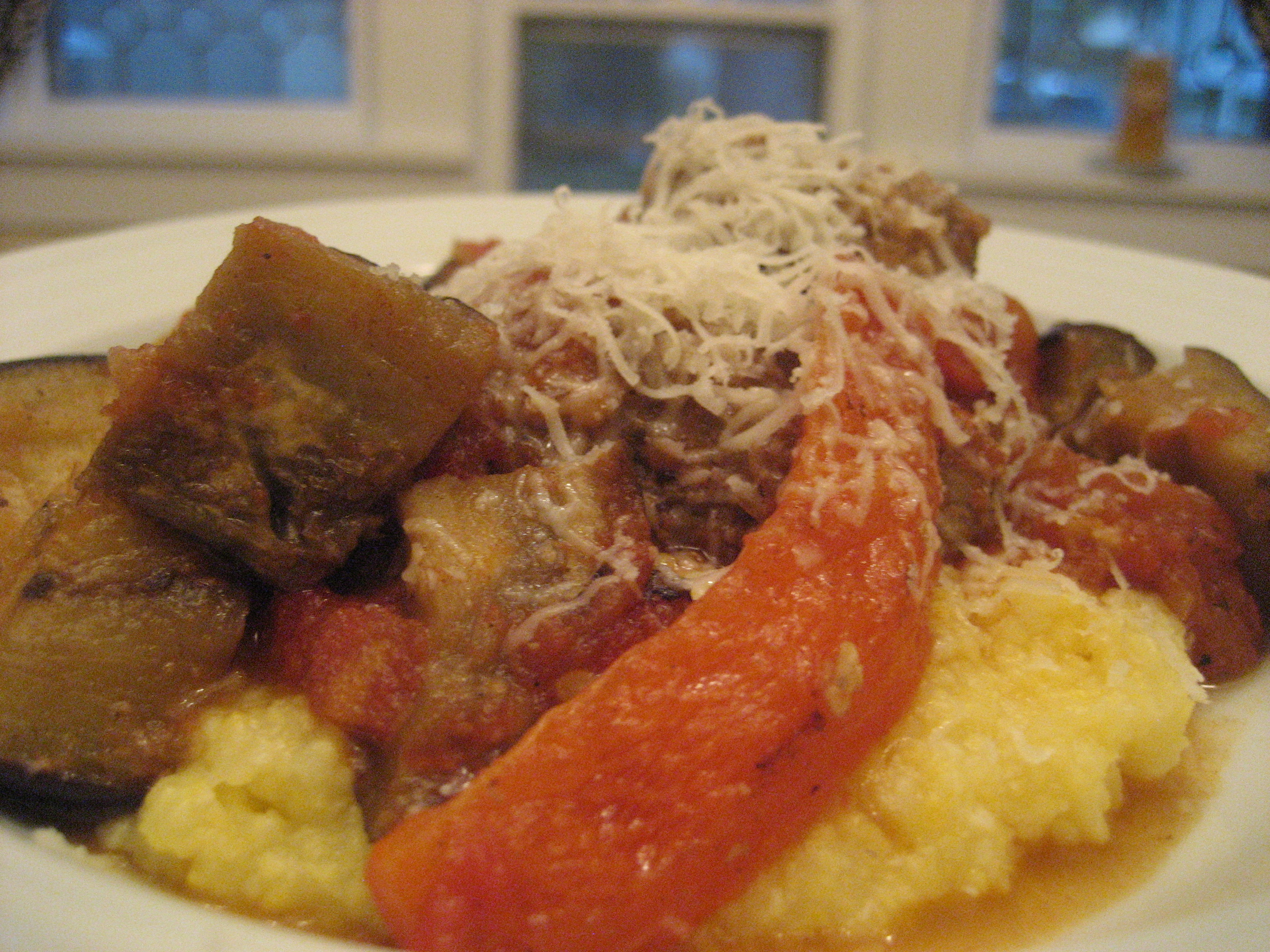
Though this blog project is a tad more work than I expected, it’s worth it for many reasons, one being the new recipes I get to try out. And I like that Kristin keeps me on my toes in the kitchen. After reading through her meals each week, I’m too embarrassed to cook/post some of my old standby recipes. After all, how many times can you type up an adaptation of the same stir-fry? So often I end up in food ruts because my old standby recipes are standby recipes for a reason — they’re good, they’re easy. But food ruts are dangerous, an easy way to forget how amazing food can taste or the thrill of finding that perfect new recipe or pulling off a multi-course dinner for a party of 10.

For those of us that love cooking, it’s not about filling our stomachs as much as creating a meal, an experience, a taste. These days I don’t have the energy to wax poetic about why I love cooking. Luckily, Jonah Lehrer has written a brilliant essay that explains the attraction quite well. All of this is a long way of saying that I’m happy this blog forces me to try new things, like making polenta for the first time. The polenta was easy to make, comforting, and the perfect base for the lovely braised lamb dish.

braised lamb paaties

Sicilian Lamb Patties Braised with Eggplant, Peppers, and Tomatoes
adapted from Bon Appétit, October 2008

Serves 6

In place of polenta, you could serve this over penne, ziti or rigatoni.

for the lamb patties:
1/2 cup (25 g) fresh breadcrumbs (from crustless French bread ground in a food processor)
1/4 cup (60 ml) water
1 1/4 lb (570 g) ground lamb
1/2 cup (30 g) finely grated Pecorino cheese
1 large egg, beaten to blend
1 tablespoon chopped fresh marjoram
1 teaspoon coarse kosher salt
1/2 teaspoon freshly ground black pepper
1/8 teaspoon ground cinnamon

for the eggplant mixture:
2 small or 1 large eggplant (about 1 1/2 lb/680 g), unpeeled, cut into 1‑inch cubes
7 tablespoons extra virgin olive oil, divided
coarse kosher salt
1 large red bell pepper, halved, seeded and cut into 1/2‑inch-wide strips
1 onion, finely chopped
1 1/3 cups (320 ml) dry white wine
3 large garlic cloves, minced
2 1/2 cups (450 g) chopped, seeded, peeled tomatoes

for the polenta:
4 cups (1 liter) water
1 teaspoon salt
1 cup (150 g) polenta (coarse cornmeal)
grated Pecorino cheese

To make the lamb patties, combine the breadcrumbs and water in a small bowl. Soak for 5 minutes, then squeeze all the water from the crumbs. Place the crumbs in a large bowl. Add the lamb and remaining ingredients and mix gently to combine. Shape into 12 oval patties, each about 2 1/2 inches long and 3/4 inch thick.

To make the eggplant mixture, preheat the oven to 350°F (180°C). Combine the cubed eggplant and 5 tablespoons of oil in a large bowl and toss to coat. Spread the eggplant out on a rimmed baking sheet and sprinkle with coarse kosher salt and pepper. Bake for 12 minutes, then turn the eggplant over and bake until soft, about 12 minutes longer.

Heat 1 tablespoon oil in a large, deep skillet over a medium-high heat. Add the lamb patties and saute until brown, about 3 minutes per side. Transfer the lamb patties to a plate. Add the bell pepper strips to the drippings in the skillet and saute until they begin to soften, about 4 minutes. Transfer the pepper to the plate with the lamb.

Reduce the heat to medium. Add the remaining 1 tablespoon olive oil and the chopped onion to the same skillet. Cover and cook until the onion is soft, stirring occasionally, about 5 minutes. Add the wine and garlic. Cook, scraping up any browned bits, until the wine is reduced to a glaze, about 7 minutes. Return the lamb and peppers to the skillet, then add the eggplant, tomatoes, and marjoram. Reduce the heat to medium-low. Cover and simmer until the lamb is cooked through and the vegetables are tender, about 12 minutes. If the sauce is thin, simmer, uncovered until it has thickened to the desired consistency. Season the sauce to taste with coarse salt and pepper.

To make the polenta, bring the water and salt to boil in a heavy, large saucepan over a medium-high heat. Gradually whisk in the polenta and reduce the heat to medium-low. Simmer until the polenta is very thick, whisking often, about 20 minutes.

Spoon the polenta into shallow bowls. Top with the lamb and vegetables, sprinkle with Pecorino cheese and serve.

Salmon with Lime Butter Sauce, Summer Tomato Salad, and Quinoa and Kidney Beans

Summer’s over, but no one told my tomato plants. After a cool August and September, our tomatoes are finally ripe and in abundance. I feel like every year I struggle to use up our tomato harvest only to plant more tomato plants the following year. This year, in addition to our CSA tomatoes and backyard containers, we (and by “we” I mean my father-in-law) are working a community garden plot. Kristin’s already posted wonderful tomato recipes, but here’s another to add to the collection.

In addition to the refreshing tomato salad, I rounded off dinner with a tangy broiled salmon dish and a new recipe, which uses quinoa. I recently discovered quinoa and am still experimenting with its possibilities. It’s one of the most nutrient-rich ingredients I’ve eaten, with high protein and lots of fiber. Not a bad carbohydrate choice as I try to shed those last few pregnancy pounds.

Salmon with Lime Butter Sauce
adapted from Gourmet, July 2006

Serves 4

4 pieces center-cut salmon fillet (about 1 inch thick) with skin
1 garlic clove, chopped
1/4 cup (60 ml) fresh lime juice
1/2 teaspoon salt
1/4 teaspoon black pepper
1/4 stick (4 tablespoons/60 g) unsalted butter, melted

Prepare the broiler or grill for cooking over a medium heat. Season the salmon all over with salt and pepper, then broil or grill, skin side down, on a lightly oiled grill rack (if using a grill, keep the lid on) for 8 to 10 minutes, until just cooked through.

While the salmon cooks, puree the garlic with the lime juice, salt, and pepper in a blender until smooth. With the motor running, add the melted butter and blend until emulsified, about 30 seconds.

Remove the salmon from the rack. I usually (but not always) remove the skin before plating; the flesh should slide easily off the skin. Drizzle each fillet with 1 or 2 tablespoons of the lime butter sauce. Serve immediately.

***

Summer Tomato Salad

Summer Tomato Salad
adapted from The New Vegetarian Epicure by Anna Thomas

Serves 6 (salad servings)

3 or 4 big, juicy vine-ripened tomatoes
1/2 medium red onion
1 bunch flat-leaf parsley
2 tablespoons olive oil
a few drops of vinegar
salt and freshly ground black pepper, to taste

Wash the tomatoes and slice them thickly crosswise. Arrange them in a single layer on a large platter. Slice the onion crosswise, thinly but not paper thin. Scatter the onion rings over the tomatoes.

Wash the parsley leaves and spin them in a salad spinner. Arrange them in a wreath around the tomatoes. Drizzle the tomatoes with the olive oil and sprinkle them with a few drops of your favorite vinegar. Add salt to your taste, and grind on some black pepper. Serve within the hour. Do not refrigerate!

***

Quinoa and Kidney Beans
adapted from Feeding the Future Cookbook (American Pregnancy Association member recipes)

8 servings

1 teaspoon vegetable oil
1 onion, chopped
3 cloves garlic, minced
3/4 cup (140 g) uncooked quinoa
1 1/2 cups (360 ml) chicken or vegetable broth
1 teaspoon ground cumin
1/4 teaspoon cayenne
salt and freshly ground black pepper, to taste
kernels from 2 ears of corn
1 x 15-oz (425‑g) can kidney or black beans, rinsed and drained
1/2 cup (15 g) chopped fresh cilantro
juice of 1 lime
avocado and/or sour cream for garnish, if desired

Heat the oil in a medium saucepan over a medium heat. Stir in the onion and garlic and saute until lightly browned. Mix the quinoa into the pan and cover with the broth. Season with cumin, cayenne, salt, and pepper. Bring the mixture to a boil. Cover, reduce the heat and simmer for 20 minutes. Stir the corn into the saucepan and continue to simmer for about 5 minutes, until heated through. Mix in the beans and continue to cook over a low heat for 2 or 3 minutes more. Stir in the cilantro. Garnish with avocado and sour cream, if desired.

Chili Fried Mackerel with Spiced Chickpea Salad and Polenta

About two years ago, my husband, daughter and I went to Copenhagen for a long weekend. Our daughter was two and a half at the time, but already was a great eater. Put her in front of a selection of ice cream, and she won’t choose chocolate or vanilla — she’ll go for Turkish delight (though in all honesty, that might just be because it’s pink). Olives, radishes, salt and vinegar potato chips and Roquefort cheese are some of her favorite foods. So we might have known better than to order her a hamburger off the kids’ menu when we went to the Cap Horn restaurant one night. She wouldn’t touch it, and instead devoured almost all of the trout Matt had ordered for himself, simply pan fried in butter (poor Matt wound up eating the burger). When it comes to fish (and her tastes in general), it seems that the stronger the flavor, the more she likes it.

This past summer, I served mackerel to her for the first time, as well as my one-year-old son. They each gobbled up their entire fillet and ate most of ours to boot. We couldn’t get over it, since we thought it might be too strong-tasting for them compared to, say, white fish. The next time he was in getting fish, Matt mentioned to the fishmonger how much our kids had liked it, who wasn’t surprised. “Kids love mackerel,” he said. That’s good news to me, since it’s an oily fish and so is a good source of omegas, plus it’s cheap, about 1 euro per fillet.

Mackerel is still in season, so get some while you can and give this simple recipe a try, which only takes 5 minutes to cook. If you’re serving this to kids who don’t like spicy food, just fry their fish first and leave out the chili, then add it to the pan when you’re ready to fry the rest. Ask your fishmonger to debone the mackerel for you, especially if you’re serving it to children, because it has lots of them and some of them are pretty big.

Chili Fried Mackerel
from Fresh from the Sea by Clodagh McKenna

Serves 2

2 tablespoons (60 g) butter
1 red chili, deseeded and finely chopped
1 garlic clove, crushed
4 fresh mackerel fillets
sea salt and freshly ground black pepper
juice of 1 lemon

Heat a frying pan and drop in the butter, chili and garlic. Once the chili butter begins to foam, add the mackerel, skin side down, and fry for 2 minutes. Season with salt and pepper, turn the fish over, squeeze the lemon juice over the fish and cook for a further 2 minutes. Remove to a plate and drizzle the chili butter over the fillets.

***

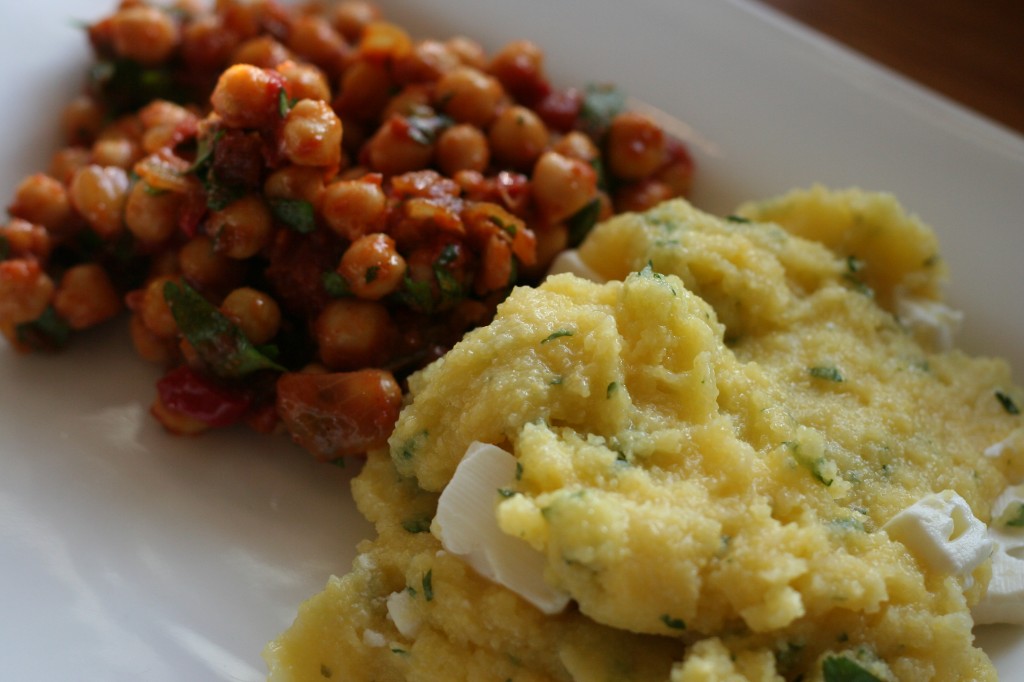
spiced chickpea salad and polenta with feta and cilantro

Spiced Chickpea Salad
adapted from Avoca Café Cookbook 2

Serves 6

1 onion, finely chopped
3 tablespoons olive oil
1‑inch piece of fresh root ginger, grated (or 1 teaspoon ground ginger)
1 red chili, deseeded and finely chopped
2 teaspoons curry powder
1 teaspoon ground cumin
1 teaspoon ground coriander
pinch of turmeric
4 garlic cloves, chopped
1 x 14-oz (400‑g) can of tomatoes
3 x 14-oz (400‑g) cans of chickpeas, rinsed and drained
1 bunch of fresh cilantro, roughly chopped
1 bunch of fresh flat-leaf parsley, roughly chopped

Gently saute the onion in the olive oil for 10 to 15 minutes without allowing it to color. Add all the spices, chili and the garlic and cook for 2 minutes. Add the tomatoes and reduce the heat to low. Continue to cook for 15 to 20 minutes, stirring occasionally, to allow it to reduce slightly. Dress the chickpeas in the tomato sauce while it’s still warm. Allow the chickpea mixture to cool slightly, then add the herbs (this stops them from discoloring). Serve warm or at room temperature. This salad is even better the next day.

***

Polenta with Feta and Cilantro
adapted from Vegetarian Cooking for Everyone by Deborah Madison

2 cups (340 g) coarse cornmeal
6 to 8 cups (about 1 1/2 to 2 liters) vegetable or chicken stock or water
2 to 6 tablespoons (30 to 90 g) butter (optional)
1 1/2 cups (250 g) feta cheese, cubed or crumbled
1 bunch fresh cilantro, chopped

Bring 6 cups (1 1/2 liters) of the stock (or water) to a boil in a large, heavy-based saucepan and add the cornmeal in a steady stream, whisking constantly to stop lumps from forming and to help prevent the maize from seizing up in the first few minutes. Lower the heat and cook, stirring almost constantly, for 30 to 45 minutes. If the polenta seizes up into a hard mass, add small amounts of the remaining 2 cups (480 ml) of stock or water while it cooks to smooth it out again. When done, season to taste with salt (you may not need any if your stock is salty). Stir in butter to taste.

Off the heat, stir in the cubed or crumbled feta cheese and chopped cilantro. Serve the soft polenta immediately or keep it warm over boiling water until ready to serve.

Ceviche Salad with Avocado, Cilantro and Green Chile, Black Beans, and Rice

My husband and I were browsing Time’s fascinating photo essay, What the World Eats, Part 1 and Part 2 yesterday. The differences in food costs, food variety, and presence of packaged foods is remarkable. In many parts of the world, dried legumes and grains are the backbone of daily eating, yet unfortunately, here in America, these items are rarely prepared by your average middle-class family.

If you become a regular visitor to our website, you will see that I frequently serve beans and rice. Not only are these items a complete protein when eaten together, containing all necessary amino acids, but they also serve as a very economical base to a meal; rice and beans for a family of four costs about $2.00. I also love that I can put the rice and beans on to cook before I leave for work (rice in our programmable rice cooker and beans in a slow cooker). With the addition of a few fresh, chopped vegetables or other accompaniments, dinner can be on the table in a matter of minutes. This menu takes a bit longer, as the ceviche must marinate for at least 1 hour, but it is a good example of what you can do with rice and beans as a starting point.

Ceviche, rice, and beans

Ceviche Salad with Avocado, Cilantro and Green Chile
adapted from Mexican Everyday by Rick Bayless

Serves 4

3/4 lb (340 g) raw shrimp
1/2 lb (225 g) raw squid, cleaned, with tentacles separated and “body” cut into 1/4‑inch rings
1 cup (240 ml) freshly squeezed lime juice
2 garlic cloves
1 cup (about 30 g) loosely packed cilantro, roughly chopped, plus extra for garnish
1 jalapeno, minced
1 teaspoon salt
1 avocado, flesh scooped from the skin, and cut into 1/4‑inch cubes
1 cucumber, peeled, seeded and cut into medium dice
1 head Boston/butterhead lettuce or 8 large leaves red or green leaf lettuce
2 green onions, sliced diagonally

Simmer the shrimp in boiling well-salted water until just cooked, about 2 minutes. Drain, then chill. Repeat with squid, simmering 20 to 30 minutes, until tender, then draining. Peel and chop the shrimp into 1/2‑inch pieces.

Put lime juice, garlic, cilantro, jalapeno and salt into a food processor and blend till smooth. Pour over the seafood in a bowl. Leave to marinate in the fridge for 1 to 4 hours, depending on your taste. When done, pour off half the marinade. Add the avocado, cucumber and salt, if needed. Divide the lettuce among 4 plates. Scoop a portion of the ceviche into the center of each arrangement. Garnish with cilantro and green onions.

***

Slow Cooker Black Beans

1 lb (450 g) dried black beans
1 onion, diced
2 cloves garlic, minced
1 teaspoon good-quality chili powder
1/2 teaspoon dried red pepper flakes
1 teaspoon ground cumin
1 teaspoon dried epazote or oregano
6 cups (1.5 l) water
salt

Combine the first 8 ingredients in a slow cooker. Cook on low for 7 to 8 hours, until the beans are tender. Season to taste with salt (usually about 1 teaspoon).

Stuffed Pork Tenderloin on Grape Tomatoes, Middle Eastern Couscous with Saffron, Green Beans, and Lemon Bars

Regretfully, I forgot to take a picture of this dish. Trust me, it looks as good as it tastes. The colors are amazing. Frankly, it smelled too good for me to wait even 5 minutes to snap a blog-suitable photo of it. So you get a picture of dessert instead, taken at leisure after dinner was finished.

Pork tenderloin is one of my favorite meats to cook. It cooks quickly, stays tender, and can be used in a variety of dishes. Though I try to keep a tenderloin in my freezer for quick weeknight dinners, this stuffed preparation would make an impressive dinner party offering. No one will guess how easy it is to make. For the green beans, simply boil or steam them for a few minutes until they are tender.

Stuffed Pork Tenderloin on Grape Tomatoes

adapted from More Fast Food My Way by Jacques Pepin

Serves 4

4 tablespoons good olive oil
1 small onion, chopped
1 bunch (about 12 oz/340 g) fresh spinach, washed, dried and stems removed
3/4 teaspoon salt
3/4 teaspoon freshly ground black pepper
1 large pork tenderloin (about 1 1/2 lb/680 g)
about 3/4 cup (90 g) grated cheddar cheese
1 box grape tomatoes (about 12 oz/340 g)

Heat 2 tablespoons of the olive oil in a large skillet over a high heat. Add the onion and cook for 2 minutes. Add the spinach, pushing it down into the skillet, and 1/4 teaspoon each of the salt and pepper. Cover and cook over a medium heat for about 1 1/2 minutes, until the spinach is wilted. Remove the lid and cook, uncovered, until the liquid from the spinach has evaporated. Transfer to a plate and allow to cool.

Trim the tenderloin of any fat and silver skin. To butterfly the tenderloin for stuffing, lay it flat on the cutting board so one end is close to you and the other end is near the top of the board. Holding your knife so the blade is parallel to the board, cut through the long side of the tenderloin, stopping when you are about 1/2 inch from the other side. Turn the tenderloin so the uncut side is closest to you and make another parallel cut below the first one, again stopping about 1/2 inch before you reach the other side. Open up the butterflied tenderloin and pound it a little to extend it to about 12 inches long by 7 inches wide.

Preheat the oven to 350°F (180°C). Arrange half the spinach mixture down the center of the butterflied tenderloin and top with the cheese. Add the rest of the spinach, fold in the sides, and roll the tenderloin back and forth to evenly distribute and encase the filling. Wrap 4 pieces of kitchen twine, each 6 to 7 inches long, around the tenderloin to secure the stuffing inside.

Heat the remaining 2 tablespoons oil in a large ovenproof nonstick skillet. Sprinkle the outside of the tenderloin with 1/4 teaspoon each of the salt and pepper. Place the tenderloin carefully in the skillet and brown it, turning occasionally, for about 5 minutes. Bake the tenderloin in the oven for 10 to 12 minutes, when it will be slightly pink in the center. Carefully remove the kitchen twine from the tenderloin. Transfer the tenderloin to a plate, cover, and keep warm in the oven while you prepare the tomatoes (the pork will continue to cook as it sits).

Add the tomatoes and the remaining 1/4 teaspoon each salt and pepper to the skillet in which you browned the tenderloin and sauté over high heat for 2 minutes, until just softened. Divide among 4 warm plates. Slice the tenderloin crosswise into 8 medallions and arrange 2 slices in the middle of the tomatoes on each plate. Serve.

***

Middle Eastern Couscous with Saffron
adapted from More Fast Food My Way by Jacques Pepin

Serves 4

2 tablespoons good olive oil
1 small onion, finely chopped
1/4 cup (about 20 g) pine nuts
1/2 teaspoon crushed saffron pistils
1 1/2 cups (225 g) Israeli couscous
1 3/4 cups (415 ml) chicken broth
1/4 teaspoon salt
1/4 teaspoon pepper

Heat the oil in a medium saucepan over high heat and add the onion, pine nuts, and saffron. Cook for 1 to 2 minutes, then add the couscous and mix well. Add the stock, salt, and pepper, mix well, and bring to a boil. Reduce the heat to very low, cover, and cook for 10 minutes. Uncover and cook over a medium heat, stirring occasionally, for 1 to 2 minutes longer to dry the grains and make them fluffy.

***

Lemon bar

Lemon Bars
from Gourmet, March 1999

makes 24 bars

These bar cookies will keep, covered and chilled, for 3 days.

1 1/2 sticks (3/4 cup/170 g) unsalted butter
2 cups (220 g) all-purpose flour
1/2 cup (100 g) packed light brown sugar
1/2 teaspoon salt
4 large eggs
1 1/2 cups (340 g) granulated sugar
3/4 cup (175 ml) fresh lemon juice (I used the juice from 2 lemons and 2 limes)
1/3 cup (40 g) all-purpose flour
3 tablespoons confectioners’ sugar

Preheat the oven to 350°F (180°C).

Cut the butter into 1/2‑inch pieces. In a food processor, process all ingredients until the mixture begins to form small lumps. Sprinkle the mixture into a 13 x 9 x 2‑inch baking pan and with a metal spatula press evenly onto the bottom. Bake the shortbread in the middle of the oven until golden, about 20 minutes. Set aside.

While the shortbread is baking, prepare the topping. In a bowl, whisk together the eggs and granulated sugar until combined well, then stir in the lemon juice and flour. Pour the lemon mixture over the hot shortbread. Reduce the oven temperature to 300°F (150°C) and bake in the middle of the oven until set, about 30 minutes. Cool completely in the pan and cut into 24 bars. Sift confectioners’ sugar over the bars before serving.