Category Archives: Seafood

Halibut with Asparagus Sauce

Remember the first weeks of the pandemic when a trip to the grocery store required intense planning and anxiety, and shelves were eerily bare? Although I quickly gave up on finding cilantro and toilet paper, I knew our basement full of freezer and pantry items would carry us through an apocalypse scenario, at least for a few weeks. I have never felt happier to have our Sitka Salmon Shares subscription stocking our freezer. If you are a seafood lover and live in the upper Midwest, I highly recommend the program. The seafood is caught by small boat fisherman in Alaska, processed and flash frozen, then shipped directly to your doorstep. You cannot beat the quality and convenience.

Last month’s delivery included halibut. I find halibut tricky to work with since it is low in fat and can be bland. This preparation is flavorful, fast, and fancy enough for a dinner party. Make sure to season the sauce well but salt the fish minimally. The prosciutto provides plenty of saltiness.
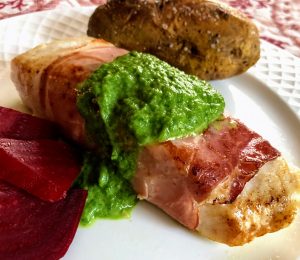
Captain Stu’s Halibut with Asparagus

adapted from Sitka Salmon Shares

  • 4 (1/4 lb each) halibut fillets
  • 4 TB butter, divided
  • 3 green onions, roughly chopped
  • 1/2 bunch asparagus, roughly chopped
  • 3 cups baby spinach
  • 8 slices prosciutto
  • 8 small, tender sage leaves
  • Olive oil
  • Salt and pepper, to taste
  • minced chives and lemon wedges, for serving

Preheat oven to 400 degrees.

In a large skillet, melt 2 TB of butter over medium heat. Add the green onions and sauté until softened, about 1–2 minutes. Add the asparagus along with 1/2 cup of water and bring to a simmer. Cook until asparagus is tender and water has been reduced to 2 Tbsp, about 6 minutes. Remove from heat and add the spinach, lightly stirring until wilted. Let cool for a few minutes, then transfer to a blender or food processor and puree until smooth with lid vented. Season well with salt and pepper and set aside.

Arrange prosciutto slices in pairs, overlapping them slightly. Place halibut fillets in the center of each, season with salt and pepper, then top each fillet with two sage leaves. Wrap prosciutto tightly around each fillet.

In a medium pan over medium-high heat, melt the remaining butter and a drizzle of olive oil. Place each prosciutto-wrapped halibut in the pan, searing on both sides until browned, about 2–3 minutes. Transfer to a baking sheet and bake for 5 minutes or until halibut is cooked through. Halibut should be firm when pressed but try not to overcook. Remove the halibut from the oven and top each with asparagus sauce, and a sprinkling of chives. Serve lemon wedge alongside.

Sweet Potato and Salmon Fishcakes with Chilli and Lime

The other day, a fellow expat tweeted, “When I see a tourist in Dublin on a nice sunny day, I always feel the urge to stop them and tell them how lucky they are.” “Never mind them,” I tweeted back, “lucky us! At least they get to go back home to a proper summer somewhere.” After weeks of rain and temperatures that rarely even get above 65°F, I’ve just about given up on summer again. Even so, I still crave bright, zesty flavors in the summer, such as it is. These fishcakes make for a light supper served with a salad — or maybe soup, if that suits your climate and your woe-is-me mood better.

Sweet Potato and Salmon Fishcakes with Chilli and Lime

Serves 4 as a light supper

If you don’t want to coat the fishcakes in breadcrumbs, you can simply dredge them in the seasoned flour and pan fry them. And if you’d rather bake the cakes in the oven instead of fry them, just put them on a baking tray lined with parchment paper in an oven at 350°F (180°C) for 20 to 30 minutes.

1 lb 2 oz (500 g) sweet potatoes
2 x 7 oz (200 g) cans of salmon
1 red chilli, finely chopped
zest and juice of 1 lime
a handful of fresh cilantro (coriander), chopped
salt and freshly ground black pepper
1 cup (120 g) flour
1 egg, beaten
1 cup (100 g) dried breadcrumbs
olive, vegetable or rapeseed oil
lime wedges, to serve
green salad, to serve

Peel the sweet potatoes and cut them into large chunks or thick slices. Place in a pot with plenty of cold water and bring to the boil. Simmer for about 10 minutes, until the potatoes are tender when pierced with a sharp knife. Drain and transfer to a large bowl. Mash the potatoes until they’re smooth, then stir in the salmon, flaking apart any large pieces with a fork. Add in the chilli, lime zest and juice, the chopped cilantro and some salt and pepper and stir well to combine. Shape the sweet potato and salmon mixture into fish cakes and set aside on a plate.

Place the flour in a shallow bowl or plate and season generously with salt and pepper. Place the beaten egg in a second shallow bowl or plate and the breadcrumbs in a third bowl or plate. First dredge each fish cake in the flour, shaking off any excess. Set aside the floured cake on a plate and repeat with the remaining cakes (doing it this way helps to keep your hands cleaner). Next, dip each floured cake in the beaten egg, making sure it gets coated all over with the egg, then place in the bowl with the breadcrumbs, sprinkling the crumbs all over the cake and gently patting them in place. Set aside the breaded cake on a plate and repeat with the remaining cakes.

Heat some oil in a large frying pan over a medium heat. Add the cakes to the pan in batches, taking care not to overcrowd the pan. Cook the cakes for 5 to 8 minutes, until the breadcrumbs are golden. Flip the cakes over and cook for 5 to 8 minutes more, until the other side is golden and the cakes are cooked through. (Alternatively, you can bake the cakes in the oven; see note above.) Serve with lime wedges and a green salad for a light summer supper.

Gratin of Fish with Cheese, Tomatoes and Herbs

Back in December, a local DIY store had an unbeatable deal on greenhouses when they had them on sale for a little over €100, so we snapped one up. Granted, it’s as small and flimsy as you’d expect a €100 greenhouse to be, but it’s still standing, despite our reservations that it would all fall to pieces in the first strong wind. And it means that we’re finally able to grow tomatoes! But if I thought my husband was besotted with his potatoes last year, that was nothing compared to his love affair with the tomatoes. Any free minute he gets, he’s pottering around out in that greenhouse, checking on the cherry and San Marzano tomatoes before he leaves for work in the morning and then again as soon as he gets in the door at night to see how they’ve ripened during the day. I don’t think we’ll have a glut of them and will probably be eating them on their own with just a little salt, pepper and a drizzle of good olive oil, but if your garden is producing a lot of cherry tomatoes or if you can get them cheap at a farmers’ market, this is one of my favorite new dishes that I’ve made a few times now and is a good way to use them.

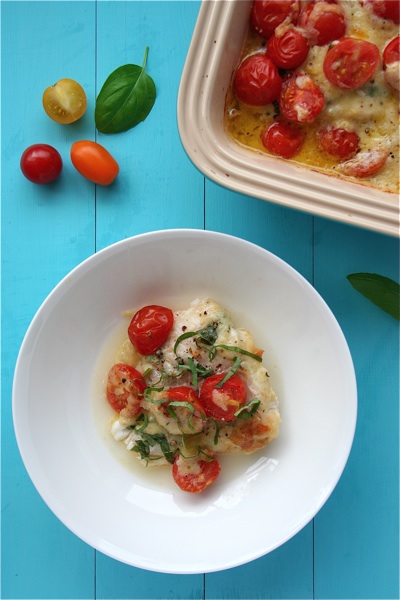
Gratin of Fish with Cheese, Tomatoes and Herbs
adapted from Rachel’s Favourite Food at Home by Rachel Allen

Serves 4

When you make this, you’ll probably start to think that the cheese and cream mixture isn’t enough to cover all the fish, but don’t worry, it will once it melts. Rachel Allen’s original recipe calls for flat fish, such as plaice or lemon sole, but I like the meatier texture of a firm white fish like hake or cod instead. If you can’t get one or the other of Gruyère or Swiss cheese (Emmental), just double the quantity of the cheese you can get. If you’re in Ireland, try using the Glebe Brethan farmhouse cheese instead of the Gruyère.

1 cup (100 g) grated Gruyère cheese
1 cup (100 g) grated Swiss cheese (Emmental cheese)
1 tablespoon Dijon mustard
5 tablespoons cream
salt and freshly ground black pepper
1 punnet (9 oz/250 g) cherry tomatoes
1 teaspoon chopped fresh thyme leaves or 2 tablespoons chopped fresh basil
1 1/2 lb (750 g) white fish fillets, such as hake or cod, skinned and deboned
green salad, to serve
boiled new potatoes, to serve

Preheat the oven to 350°F (180°C).

Place the grated cheeses, mustard and cream into a bowl and mix well. Season with salt and freshly ground black pepper and set aside.

Cut the cherry tomatoes in half and place into a bowl. Season with a little salt and add the herbs. Mix the ingredients well so that the cherry tomatoes are well seasoned.

Lay the fish in a gratin dish (or individual ovenproof dishes) in a single layer if you can. Dot the cheese mixture over the fish, then scatter the tomatoes and herbs on top. Transfer the fish to the oven and cook for 20 to 30 minutes (or 15 minutes for single portions), until the cheese is golden brown and the fish is cooked through.

To serve, place a portion of the fish on a plate and serve with a big green salad and some boiled new potatoes.

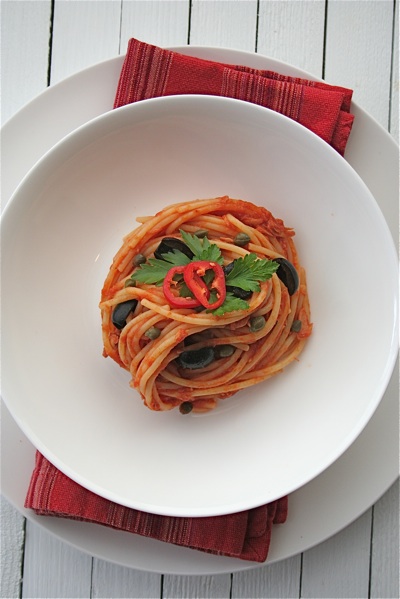
Spaghetti alla Puttanesca

Spaghetti alla puttanesca is a classic store cupboard staples recipe. Nicknamed “whore’s pasta,” Nigella Lawson writes that “the general consensus seems to be that this is the sort of dish cooked by slatterns who don’t go to market to get their ingredients fresh, but are happy to use stuff out of jars or tins.” Last week we spent five days in the west of Ireland in County Sligo, and coming home to an empty fridge after driving coast to coast (which, granted, only takes 3 hours from Sligo to Louth), I was still able to rustle this up from basics that I always have in the pantry along with a green salad from my garden. Whore’s pasta to the rescue!

Spaghetti alla Puttanesca

Serves 4 to 6

1 1b 2 oz (500 g) spaghetti
olive oil
2 or 3 garlic cloves, chopped
1 or 2 fresh red chillies, finely chopped, or 1/2 teaspoon chilli flakes
1 x 1 oz (30 g) can of anchovy fillets, drained and chopped
1 x 8 oz (225 g) can of tuna, drained
2 tablespoons capers, drained
1 x 1 1/2 lb (700 g) jar of passata or 2 x 14 oz (400 g) cans of chopped tomatoes
salt and freshly ground black pepper
juice of 1 lemon (optional)
3/4 cup (100 g) stoned black olives, halved
a small bunch of fresh flat-leaf parsley, chopped
green salad, to serve
garlic bread, to serve

Cook the spaghetti in a large pot of boiling salted water according to the instructions on the packet.

Meanwhile, heat a large saucepan (one big enough to accommodate all the cooked pasta later) over a medium-low heat. Add a splash of olive oil, then add in the garlic, chillies and anchovies and cook for 1 or 2 minutes, until the anchovies have broken down and almost melted, but taking care not to let the garlic burn. Add in the tuna and capers, then stir in the passata or canned tomatoes. Season generously with salt and pepper, raise the heat to medium and allow to simmer while the pasta cooks.

Before draining the pasta, reserve a mugful of the cooking water. Add the drained pasta directly to the sauce and add in the lemon juice, the olives and most of the chopped parsley. Stir well to coat all the pasta with the sauce, adding in some (or all) of the reserved pasta cooking water if you want to loosen the sauce a bit. Divide the pasta between individual bowls or plates and scatter the remaining parsley on top to garnish. Serve with a green salad, garlic bread and a glass of wine.

Salmon with Lentils and Mustard-Herb Butter

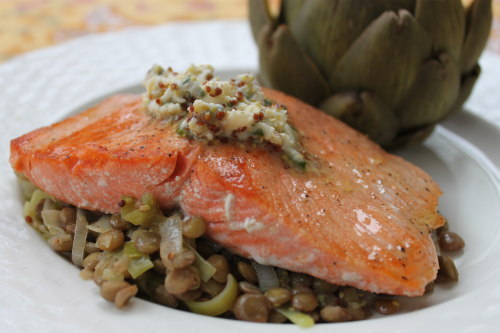
You may have noticed that Kristin and I cook salmon pretty regularly. Not only is salmon healthy, loaded with omega‑3 and other good stuff, but it’s easy to prepare and hard to mess up. Unlike some more delicate varieties of fish, salmon can take a few minutes of overcooking. It’s also less “fishy” tasting than most other seafood, so most kids won’t turn up their noses at it. This recipe is one of my family’s most recent favorites. It’s fancy enough to serve for guests, but a breeze to throw together, especially if you make the compound butter and lentils the night before. Steamed artichokes make an excellent side dish, especially if served with a bit of melted butter and lemon juice for dipping.

The picture doesn’t quite do this dish justice. I snapped the photo quickly before I called the kids to dinner. By the time everyone was seated, their sippy cups filled, and our napkins unfolded, the butter had melted beautifully, leaving the salmon with a lovely layer of herbs and mustard seeds.

Salmon with Lentils and Mustard Butter

Salmon with Lentils and Mustard-Herb Butter (Saumon aux Lentilles)
adapted from Gourmet, March 2008

For mustard-herb butter:
5 tablespoons unsalted butter, softened
1 tablespoon chopped chives
1 teaspoon chopped tarragon [I substituted 1/2 teaspoon dried tarragon]
2 teaspoons grainy mustard
2 teaspoons fresh lemon juice

For lentils:
1 cup French green lentils
4 cups water
2 medium leeks (white and pale green parts only)
1 tablespoon unsalted butter
1/2 to 1 tablespoon fresh lemon juice

For salmon:
4 (6‑ounce) pieces skinless salmon fillet
2 tablespoons unsalted butter

Make the mustard-herb butter:
Stir together all the ingredients with 1/4 teaspoon each of salt and pepper. [The mustard-herb butter can be made 1 day ahead and chilled, covered. Soften at room temperature before using (1 hour).]

Cook the lentils:
Bring the lentils, water, and 3/4 teaspoon salt to a boil in a heavy medium saucepan, then reduce heat and simmer, uncovered, until the lentils are just tender, 20 to 25 minutes. Remove from heat and let stand 5 minutes. Reserve 1/2 cup cooking liquid, then drain lentils. [The lentils can be cooked (but not drained) 1 day ahead and chilled in cooking liquid, covered (once cool).]

While the lentils cook, chop the leeks, then wash them. Cook the leeks in the butter in a heavy medium skillet over medium-low heat, stirring occasionally, until softened, 6 to 8 minutes.

Add the lentils with the reserved cooking liquid to the leeks along with 3 tablespoons mustard-herb butter and cook, stirring, until the lentils are heated through and the butter is melted. Add the lemon juice and salt and pepper to taste. Remove from heat and keep warm, covered.

Sauté the salmon while the leeks cook:
Pat the salmon dry and sprinkle with 1/2 teaspoon salt and 1/4 teaspoon pepper (total).

Heat the butter in a large nonstick skillet over medium-high heat until foam subsides, then sauté the salmon, turning once, until golden and just cooked through, 6 to 8 minutes total.

Serve the salmon, topped with the remaining mustard-herb butter, over lentils.

Scallop, Chorizo and Artichoke Paella

I’d like to think that if blogs had been around when Kelly and I went to high school and college together, we might have turned out like Cara Eisenpress and Phoebe Lapine, blogging our way through our first boyfriends, first jobs and first dinner parties as we learned how to cook along the way. We might have set up a blog like their popular Big Girls, Small Kitchen, landed ourselves a book deal and had the Barefoot Contessa write the foreword to it. If only, right? But failing all that, I wish someone had given me a cookbook like theirs, In the Small Kitchen, when I moved into my first apartment and started cooking for myself and my friends. It would have been a hell of a lot better than 1,001 Vegetarian Recipes.

The book is aimed at the twenty-something crowd just finding their feet in the kitchen, with chapters like ‘Cooking for One’, ‘Potlucking’, ‘Cocktail Parties’, ‘Dating and Food’ and ‘One Year Closer to Thirty’, but there’s plenty here to inspire complete beginners and more well-seasoned cooks alike. Also bookmarked to try are Provencal baked chicken, chipotle hummus, black bean dip, coconut peanut sauce, spiked lemonade and pumpkin cake with chai cream. With graduation season upon us, In the Small Kitchen would make the perfect gift for students heading off to college or moving out into their own place, or for any new cook who’s just starting to learn their way around the kitchen.

Scallop, Chorizo and Artichoke Paella
adapted from In the Small Kitchen by Cara Eisenpress and Phoebe Lapine

Serves 8

I made a special trip to the fishmonger to get scallops, only to be told that they didn’t have any because of the recent bad weather (typical!). After some quick thinking, I decided to substitute 1 lb (450 g) of prawns instead. I simply skipped the first step and added the prawns into the paella at the very end of the cooking time, letting the heat of the rice quickly cook them right before serving. This dish reminded me of one of our family favorites, oven-baked risotto with sausages and tomato, and was just as much of a hit with the kids.

2 to 3 tablespoons olive oil
1 lb (450 g) scallops
1 lb (450 g) chorizo, cut diagonally into 1 1/2‑inch pieces
1 large onion, diced
4 cloves garlic, minced
8 to 10 scallions, white and green parts chopped separately
2 cups (360 g) Arborio rice
1/2 cup (125 ml) dry white wine or vermouth
1 x 15 oz (400 g) can of crushed tomatoes
1 x 9 oz (250 g) package frozen artichoke hearts, or jarred or canned artichoke hearts (rinsed and drained if using jarred or canned)
2 teaspoons smoked paprika
1 teaspoon salt
3 to 4 cups chicken stock
lemon wedges, for garnish

In a large cast iron skillet or a Dutch oven, heat 2 tablespoons of the olive oil over a medium-high heat until the oil is shiny and just about to smoke. While the oil is heating, quickly pat the scallops dry and remove and discard the tough side muscles. Sear the scallops in batches in the hot oil until browned and crusty on both sides, about 2 minutes per side. [Check out this post from The BA Daily blog about how to perfectly sear scallops.]

Transfer the scallops to a plate. Add the chorizo to the skillet and brown it, turning on all sides, for 2 to 5 minutes. Remove the chorizo with a slotted spoon and set aside.

Reduce the heat to medium and saute the onion in the remaining oil until translucent, scraping up any drippings in the skillet. Add the garlic and the white part of the chopped scallions and cook for another 2 minutes. Add the rice and stir to coat it in the onion mixture, allowing it to get covered in the oil and begin to toast, which should take about 3 minutes. Add the wine and cook for 2 to 3 minutes, until the liquid has reduced by nearly half. Use your spoon or spatula to help deglaze the pan and lift up any caramelized bits.

Stir in the tomatoes and their juices, artichokes, paprika and salt. Return the chorizo to the skillet and add enough stock to submerge the rice mixture. Bring the liquid to a boil, then reduce the heat to medium-low and simmer for 25 to 30 minutes, until the rice is cooked through, all the liquid has been absorbed and the rice is beginning to become crusty around the edges.

Using the back of your spoon, make indents in the top of the rice and arrange the scallops in them. Pour the scallop juices over the skillet and cook until all the liquid has been absorbed. Garnish with the chopped scallion greens and lemon wedges. Serve warm, straight from the skillet.

Mackerel with Warm Potato and Chorizo Salad

A few months ago, someone was on Twitter asking for recommendations for where to bring visitors for good seafood in Kinsale, County Cork. About a dozen people replied, and everyone said the same thing — Fishy Fishy. So it’s no surprise that Martin’s Fishy Fishy Cookbook has already entered its second printing just a few weeks after being released. Like the name of his TV show says, Martin Shanahan is mad about fish and he wants everyone else to love it too. My favorite episode from his first series was when he cooked mussels at the cattle mart in the land-locked Midlands and tried to get farmers who had never had a mussel in their lives to taste them (and almost all of them liked them). But even though Ireland is an island nation, we export most of our fish and notoriously eat very little of it ourselves. Martin thinks this is down to what he calls the “fear factor” when cooking fish, and his mantra has become “no skin, no bones, no fear”.

Flipping through his new cookbook and dog-earing pages of tempting recipes to try, his enthusiasm is catching. This mackerel with a warm potato and chorizo salad was outstanding, but also bookmarked are the crab crumble, warm chilli seafood salad, salmon and cucumber wraps and the Thai-style white Pollock fish cakes with Asian cabbage and a sweet and sour dipping sauce. With recipes that sound that good, he’s bound to pick up loads of new seafood-loving converts.

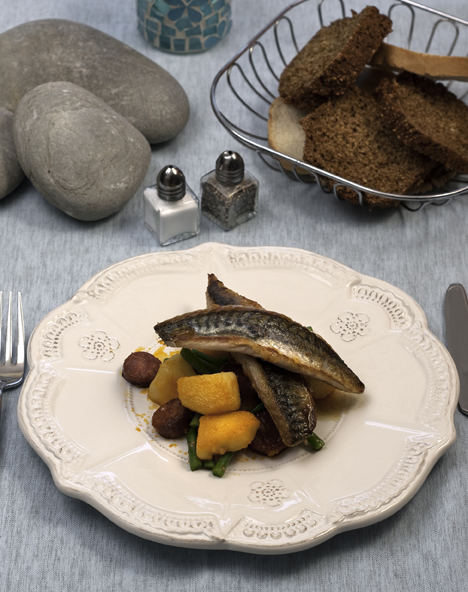
Photo © Kevin O’Farrell from Martin’s Fishy Fishy Cookbook

Mackerel with Warm Potato and Chorizo Salad
adapted from Martin’s Fishy Fishy Cookbook by Martin Shanahan

Serves 4

Chorizo is one of those ingredients (like bacon) that automatically makes anything better, but the dressing is what really made this recipe for me — it gave it just a little oomph and lifted the whole dish. Martin says that you can substitute some lightly cooked kale for the green beans here. Next time I make this — and there will definitely be a next time — I’m going to try using smoked mackerel fillets, warmed through, since I can get that more easily than fresh mackerel.

For the salad:
1 1/4 lb (600 g) potatoes, cooked
1 link of chorizo sausage
olive oil
7 oz (200 g) green beans, blanched and refreshed in ice water
salt and freshly ground black pepper
8 mackerel fillets

For the vinaigrette:
3 tablespoons olive oil
1 tablespoon red wine vinegar
1 teaspoon French mustard
salt and freshly ground black pepper

Cube the cooked potatoes and slice the chorizo. Heat a little oil in a pan and add the chorizo. Cook for 1 or 2 minutes to release the oil from the sausage, then add the potatoes and green beans. Make the vinaigrette by whisking together all the ingredients or shaking to combine in a screw-top jar, then toss the potato mixture in this dressing.

Heat a pan over a high heat and add a little oil. Season the mackerel fillets with salt and pepper, then cook the mackerel skin side down, pressing down on the skin to crisp it. Cook for 2 minutes, then turn and cook for a further 2 minutes on the other side.

Spoon a little of the warm potato salad into the center of each plate and top with the mackerel fillets.

Fish with Edamame Pesto and Cookies-and-Cream Ice Cream Cake

In what I suspect will become a birthday tradition, Sam once again asked for “chocolate cake with whipped cream” for his birthday party this year. Although my holiday schedule wasn’t quite as hectic as Kristin’s, between December 1st, 2010 and January 1st, 2011, I had already celebrated eight days of Chanukah, my husband’s birthday, my birthday, Christmas, and New Year’s.  Exhausted from the festivities, I was tempted to remake last year’s icebox cake and spare myself the time it would take to find a new recipe to fit Sam’s party criteria. But I just couldn’t brush off the request that easily. It’s not Sam’s fault he was born the first week in January and that his birthday, like mine, tends to be sucked up and forgotten amidst the winter holiday hustle and bustle. I luckily found another great make-ahead cake covered in whipped cream, chocolate, and–as an added  bonus–sprinkles.  Despite its less than perfect appearance (to be blamed on a final layer of too warm hot fudge sauce), this cake was a real crowd-pleaser.

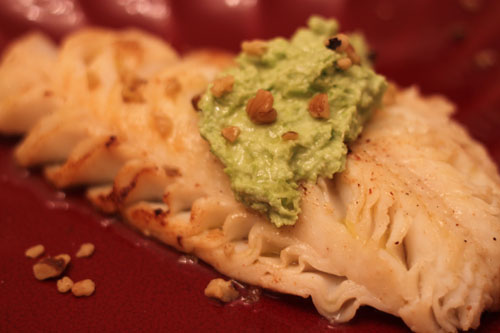
The birthday dinner itself was a lighter affair. Sam is a huge fan of Japanese food, especially edamame, so this edamame-based pesto caught my eye while I browsed cookbooks for a cake recipe. The pesto tasted amazing dolloped on a piece of sauteed cod, and nearly as good spread on a cracker later that night as a bedtime snack. I rounded out dinner with simple steamed veggies and cooked quinoa.

Fish with Edamame Pesto
adapted from Mark Bittman’s Kitchen Express: 404 inspired seasonal dishes you can make in 20 minutes or less

serves 3

1 bag frozen edamame (in pods)
olive oil
1 clove garlic, grated
juice of half a lemon
handful of grated Parmesan cheese
salt and pepper, to taste
1 lb (450 g) cod or other fish fillet(s)
2 tablespoons butter or olive oil
chopped walnuts, for garnish

Blanch the frozen edamame in boiling salted water for 3–5 minutes until tender. Drain and rinse the edamame under cold water. Shell the soybeans and place them in a blender or food processor with a few tablespoons of olive oil (or more, as needed) to get a nice puree. Add the garlic, lemon juice, and Parmesan and blend until smooth. Season the puree to taste with salt and pepper.

Season the fish fillet with salt and pepper. Cook the fillet(s) in the butter or olive oil over medium heat about 4 minutes per side or until golden and cooked through. Serve the fish with a spoonful of the pesto and garnish with chopped walnuts.

***

Cookies-and-Cream Ice Cream Cake
adapted from Bon Appetit, June 2000

serves 12

1 x 16-oz (45o‑g) pound cake, thawed if frozen
1/2 gallon (about 1 kg) cookies-and-cream ice cream, slightly softened

12 oz (340 g) hot fudge sauce (purchased or homemade)
6 oz (170 g) semisweet chocolate chips
1/4 (60 ml) cup water
10 Oreo cookies, coarsely chopped

1 cup (240 ml) chilled whipping cream
2 tablespoons sugar
candy sprinkles

Cut the cake into 1/3‑inch-thick slices. Halve each slice diagonally, forming triangles. Cover the bottom of a 9‑inch-diameter springform pan with the cake by arranging some triangles, points facing in, around the edge of pan. Fill in the center with more triangles; then cut additional pieces to fill in any spaces. Spread half of the ice cream over the cake. Freeze until firm, about 1 hour.

Stir the fudge sauce, chocolate chips and 1/4 cup water in a heavy medium saucepan over medium-low heat until melted and smooth. Cool to just barely lukewarm. Spread half of the fudge sauce over the ice cream. Sprinkle with the cookies. Top with enough remaining cake slices to cover. Spread the remaining ice cream over. Freeze 1 hour.

Stir the remaining fudge sauce over medium-low heat until barely lukewarm. Pour the sauce over the ice cream, spreading to the edge. Freeze at least 6 hours or overnight.

To serve, let cake sit in fridge about 15 minutes to slightly thaw. While the cake thaws, beat the cream and sugar in a medium bowl to stiff peaks. Run a knife around the pan sides to loosen the cake. Release the pan sides. Spread the whipped cream around the side of the cake and, if desired, pipe a border of whipped cream around the top edge of the cake. Scatter sprinkles or other small candies atop the cake.