Category Archives: Grains and pulses

Homemade Italian Sausage Patties with Goat’s Cheese Polenta

The first Thanksgiving I spent in Ireland, in 1999, I was very blasé about it beforehand; I still remember that I’d planned to make enchiladas that night. But at the last minute, I got a little weepy and ran out to the grocery store to see what I could find that might be more fitting, and bought some turkey escalopes and a jar of Ballymaloe cranberry sauce instead. My last Stateside Thankgsiving was in 1998, and although we’ve always cooked a traditional dinner every year, celebrating with anywhere from two to twelve friends and once even family, when my dad and stepmom came over for a visit, it’s just not the same.

So as long as I’m feeling homesick, today’s as good a day as any to talk about Italian sausages, one of the foods I still miss. There were plenty of foods I missed and craved when I first moved. I used to ask anyone who came to visit to bring me a bag of bagels, not even caring that they’d be stale by the time I got them, and Matt always requested an economy-size jar of Skippy peanut butter. Once or twice I’ve brought cans of Libby’s pumpkin puree back in my suitcase so that I could make pumpkin pie. I gradually stopped hankering after most of the foods I missed, but I’ll never stop wishing for a ready supply of Italian sausages. When we visited my mom in Florida earlier this year, she asked if there was anything in particular we wanted for dinner, and the only thing I requested was Italian sausages and peppers, one of her signature dishes. If I wasn’t feeling homesick already, just thinking of that dinner would do it. It’s one of the dishes that will always taste like home to me.

Happy Thanksgiving to all our readers, wherever you may be!

Home-made Italian sausages with Goat’s Cheese Polenta
adapted from A Kitchen Year by Paula McIntyre

Serves 4

for the sausage patties:
1 medium onion, peeled and finely chopped
2 cloves garlic, crushed
1 teaspoon fennel seeds, ground
1/2 cup (120 ml) red wine
1 3/4 lb (800 g) pork mince
1 tablespoon chopped fresh oregano leaves
1 tablespoon chopped fresh rosemary
1 teaspoon chopped fresh red chili
1 teaspoon smoked sweet paprika
1 teaspoon salt

for the sauce:
2 tablespoons olive oil
2 medium onions, peeled and finely sliced
2 cloves garlic, crushed
1/2 cup (120 ml) red wine
1 x 14-oz (400‑g) can chopped tomatoes
3/4 cup (180 ml) chicken stock
salt and freshly ground black pepper
a handful fresh chopped flat-leaf parsley

for the goat’s cheese polenta:
1 1/2 pints (700 ml) chicken or vegetable stock
1/2 lb (225 g) polenta
1/2 cup (50 g) grated Parmesan cheese
3 oz (90 g) goat’s cheese
handful fresh chopped flat-leaf parsley leaves
salt and freshly ground black pepper

To make the sausage patties, place the onion, garlic, fennel seeds and red wine in a saucepan and boil until only 1 tablespoon of liquid remains. Cool. Mix this with the pork and the remaining ingredients. Form into walnut-sized balls and press down to flatten.

To make the sauce, heat the oil in the pan over a high heat and add the sausage patties. Cook until sealed and golden on both sides, about 2 minutes. Remove from the heat and set aside. Lower the heat and add the onions and garlic, cooking until they’re golden, about 10 minutes. Add the wine and bring to the boil. After 2 minutes, add the tomatoes and stock. Cover the pan with a lid and simmer for 30 minutes. Check the seasoning and add the parsley.

To make the polenta, bring the stock to the boil. Slowly add the polenta in a steady stream into the stock, whisking all the time. When all the polenta is incorporated, lower the heat to s gentle simmer. Cook, stirring frequently, until the polenta comes away from the side of the pan. This will take 40 minutes for traditional polenta and about 5 minutes for the instant variety. Add the Parmesan and mix well. Crumble the goat’s cheese and fold into the polenta with the parsley. Season to taste.

To serve, divide the polenta between the individual serving bowls, place sausage patties on top and spoon over the sauce.

White Cheddar Polenta with Sauteed Greens and Garlic-roasted Portobellos

Ever since my first try at making polenta a couple weeks ago, I’ve been craving another taste of it and wondering if it was only beginner’s luck that made it so delicious. How had I cooked on a daily basis for so many years without using this staple ingredient? Since last night was a work night, I certainly didn’t have the time to braise any meat as I did with my first polenta recipe. Instead, I found a dish that looked equally as tasty but could be cooked in half an hour. I also liked that it was vegetarian. Nobody needs to eat meat every day (that means you, Dad!). I served this with just a bottle of Malbec but next time I think a salad would be a nice accompaniment.

white cheddar polenta with roasted portabellos

White Cheddar Polenta with Sauteed Greens and Garlic-roasted Portobellos
adapted from Bon Appétit, January 2001

Serves 4

4 medium portobello mushrooms
8 cherry tomatoes, halved, or 4 plum tomatoes, quartered
5 tablespoons olive oil
4 garlic cloves, minced
1 tablespoon chopped fresh parsley
salt and freshly ground black pepper
4 cups (1 liter) water
1 1/2 teaspoons salt
1 cup (225 g) polenta (coarse cornmeal) or yellow cornmeal
2 tablespoons butter
1 cup (packed) grated sharp white cheddar cheese (about 4 oz/110 g)
1 large bunch Swiss chard, ribs cut away, leaves cut into 3 x 1‑inch strips
1 x 7‑oz (200‑g) bag fresh spinach leaves

Preheat the oven to 400°F (200°C). Oil a 13 x 9‑inch baking dish. Remove the stems from the mushrooms and chop the stems finely; place the stems in the prepared baking dish. Using a small spoon, scrape away the dark gills from the underside of the mushrooms and discard. Cut each mushroom cap into 8 wedges; add them to the baking dish with the chopped stems. Sprinkle the tomatoes around the pan and drizzle with about 3 tablespoons of oil. Sprinkle with 2 minced garlic cloves, parsley, salt and pepper on top, and toss to coat. Bake until the mushrooms are tender, 25 minutes.

Meanwhile, combine 4 cups (1 liter) of water and 1 1/2 teaspoons of salt in a large saucepan. Bring to a boil. Gradually whisk in the polenta. Reduce the heat to low. Cook until the polenta thickens and begins to pull away from sides of pan, whisking often, about 25 minutes for polenta or 15 minutes for yellow cornmeal. Whisk in the butter, then the cheese. Season to taste with salt and pepper.

While the polenta cooks, heat 2 tablespoons of oil in a large skillet over a medium-high heat. Add 2 minced garlic cloves and saute for 30 seconds. Add the Swiss chard and cook for 2 minutes. Add the spinach and saute until the greens are tender but still bright green, about 4 minutes more. Season with salt and pepper.

Spoon the polenta onto plates. Top with the greens and the portobello mushrooms mixture.

Pumpkin Seed and Panko-crusted Salmon with Quinoa-stuffed Squash

We’re still eating pumpkin seeds from last week’s Halloween pumpkin carvings. They’re a great snack when roasted and salted and also lend a nice nuttiness to savory dishes. As you can tell by the side dish, our quinoa obsession continues. This dish was tasty when paired with the salmon but would also make a lovely vegetarian main course, too. It may be my favorite quinoa dish yet.

Pumpkin Seed and Panko-crusted Salmon

Serves 6

6 x 6‑oz (170‑g) boneless salmon fillets
salt and pepper, to taste
1/2 cup (30 g) roasted and salted pumpkin seeds
1 cup (60 g) panko breadcrumbs
1/2 teaspoon dried thyme
1/2 teaspoon chili powder
2 tablespoons olive oil or melted butter
1 tablespoon mayonnaise

Preheat the oven to 425°F (220°C). Line a baking sheet with parchment paper. Lay each piece of salmon, skin side down, on the lined baking sheet and season with salt and pepper, to taste.

Process the pumpkin seeds in a food processor to a fine breadcrumb consistency. Sift the processed seeds through a large mesh strainer to remove any husks that did not process. Blend the processed seeds with the panko, spices and olive oil or butter, mixing to coat the crumbs evenly with the oil or butter.

Brush the top of each fillet with 1/2 teaspoon of mayonnaise. Spoon the pumpkin seed mixture on top of the salmon fillets, patting down to adhere the mixture to the fish. Roast in the preheated oven for about 10 minutes, until the salmon begins to flake. Remove the salmon from the oven and let rest for 5 minutes before serving.

***

Quinoa-stuffed Squash
adapted from Rare Earth Farm newsletter, October 29, 2009

Serves 6 as a side dish, 3 as a main course

3 carnival or acorn squash
3 tablespoons olive oil, divided
salt and freshly ground black pepper, to taste
1 1/2 cups (350 ml) broth
1 cup (170 g) quinoa, rinsed
1/2 cup (60 g) raisins
1/2 cup (50 g) slivered almonds, lightly toasted
1 onion, minced
1/2 teaspoon cinnamon (or 1 cinnamon stick)
1 cup (110 g) shredded Gruyere cheese

Preheat the oven to 375°F (190°C). Cut the squash in half and remove the seeds. (I use a grapefruit spoon to easily remove the seeds and membranes.) Coat the inside of each squash half lightly, using about 2 tablespoons of olive oil. Season the squash with salt and pepper. Put the squash in a roasting pan, cut side down, and fill the pan with 1/4 inch of water. Roast the squash for 25 to 30 minutes, until just tender.

While the squash roasts, heat the broth to a boil, then stir in the quinoa and raisins and cook, covered, until the broth is absorbed. The quinoa will be al dente, not soft. While the quinoa cooks, toast the almonds in a small skillet. Pour the almonds onto a plate to cool. Saute the onion along with the cinnamon in the same skillet for about 10 minutes, until translucent. When the quinoa is done, mix in the almonds and half the cheese, and the onions. The squash should be nearly done at this point — a knife should enter the flesh easily and the water should have evaporated. Remove the roasting pan from the oven and fill each squash half with the quinoa stuffing. Top each half with the remaining cheese. Bake for 5 minutes, until the cheese melts.

Pumpkin, Feta and Cilantro Quesadillas and Lentil-Rice Salad with Chorizo

Sitting down to think about what to say about pumpkins, the first thing that popped into my head was the time my dad took me to the record store at the mall for my sixteenth birthday and let me pick out a CD as a present. I chose Siamese Dream by The Smashing Pumpkins, which back then was a cool new album. “Smashing … Pumpkins?” he said slowly. “What the heck kind of a name for a band is that?” No doubt I answered by just rolling my eyes. Fast forward another sixteen years, and instead of buying alternative CDs, I’m buying tickets at my daughter’s school for a pumpkin they’re raffling off as a fundraiser. How times change.

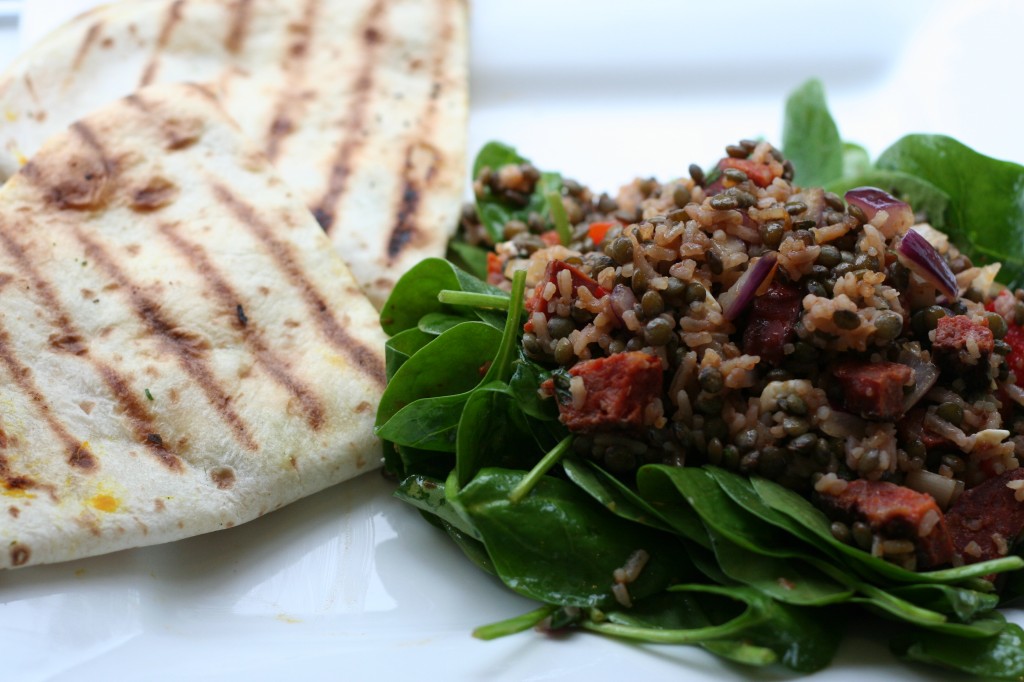
pumpkin quesadillas with lentil-rice salad

Pumpkin, Feta and Cilantro Quesadillas 
adapted from Bon Appétit, October 2009

Serves 6

1 lb (450 g) peeled and deseeded sugar pumpkin or butternut squash, cut into 1 1/2‑inch cubes (about 3 cups)
1 jalapeño, deseeded and finely chopped (about 2 tablespoons)
salt and freshly ground black pepper
12 x 8‑inch-diameter flour tortillas
10 oz (280 g) feta cheese, crumbled
1 1/2 cups (45 g) coarsely chopped fresh cilantro
2 limes, each cut into 6 wedges

Cook the pumpkin or squash in a large saucepan of boiling salted water until tender but not falling apart, about 10 minutes. Drain and cool for 10 minutes. While the pumpkin is still warm, transfer to a food processor or blender and puree until smooth. Stir in the jalapeño and season with salt and pepper.

Divide the pumpkin mixture equally among 6 tortillas (about 1/4 cup (60 ml) per tortilla) and spread it evenly across the tortilla. Sprinkle feta over each tortilla. Top each with 1/4 cup (10 g) cilantro and sprinkle with black pepper. Top with the second tortilla.

Heat a heavy, large griddle or skillet over a medium-high heat. Cook the quesadillas until golden and dark char marks appear, about 1 minute per side. Serve with lime wedges.

***

Lentil-Rice Salad with Chorizo
adapted from Mexican Everyday by Rick Bayless

Serves 4

for the dressing:
2 oz (60 g) chorizo, casing removed
2 cloves garlic, finely chopped
2/3 cup (160 ml) vegetable oil, olive oil or a mixture of the two
1/4 cup (60 ml) apple cider vinegar
1 teaspoon oregano

for the salad:
2/3 cup (200 g) Puy or brown lentils (not red or yellow, as these will fall apart during cooking)
1/2 cup (90 g) rice (long-grain rice makes the fluffiest salad)
1 tablespoon salt
1 small red onion, thinly sliced
4 oz (110 g) chorizo or good-quality ham, cut into 1/4‑inch cubes
1 red bell pepper, roasted, peeled and sliced
4 oz (110 g) baby spinach

First, make the dressing. Place the chorizo in a small skillet and set over a medium heat. Cook, stirring and breaking up clumps, until the sausage is browned and cooked through, 8 to 10 minutes. Add the garlic and stir for 1 minute, then remove from the heat.

Transfer the chorizo and garlic into a screw-top jar. Add the oil, vinegar and oregano, secure the lid and shake until smooth. Taste and season with salt if you think it needs it (Rick Bayless recommends 1/2 teaspoon). Refrigerate until ready to use. Shake well immediately before dressing a salad. If you want to use this as a warm dressing (as is common for spinach salad), microwave uncovered for 15 to 20 seconds, secure the lid and shake again.

To make the salad, pour about 2 quarts (2 liters) of water into a large pot and set over a high heat. Add the salt. When the water boils, add in the lentils and rice. Reduce the heat slightly, but keep the water at a brisk boil and cook until the lentils and rice are tender (no chalkiness inside) but show no signs of falling apart, about 15 minutes. Pour into a strainer set in the sink to drain completely.

Scoop the lentil-rice mixture into a very large bowl, along with the red onion. Pour in about 1/4 cup (60 ml) of the dressing and mix well. Add the chopped chorizo or ham and red pepper to the lentils and toss to combine. Season to taste.

Scoop the spinach into a large bowl. Shake the dressing throughly to blend, then drizzle on about 3 tablespoons and toss to combine. (Save the rest of the dressing for another salad.) Divide the salad among 4 plates, roughly forming it into nests. Scoop a portion of the lentil salad into the center of each and serve.


Blue Cheese-stuffed Mushrooms, Sage Roasted Chicken, and Quinoa with Beets and Goat’s Cheese

Poor Reuben and Sam had to test out three of my concoctions tonight. I picked out some “real” recipes earlier in the week but decided to use up as much wilting produce in my fridge as possible instead. I don’t normally make an appetizer for a weeknight dinner, but what else can you do with a small wedge of very ripe blue cheese except stuff it in some mushrooms? I won’t say these are the finest recipes I ever created, but together they made for a satisfying dinner.

Blue Cheese-stuffed Mushrooms

Makes about 14 to 16 mushrooms

1 lb (450 g) white mushrooms
1/2 cup (25 g) fresh breadcrumbs
1/2 teaspoon garlic powder
1/4 teaspoon onion powder
1 1/2 oz (45 g) blue cheese
4 tablespoons olive oil or melted butter
salt and freshly ground black pepper, to taste

Preheat the oven to 375°F (190°C). Wash the mushrooms quickly under running water and dry them. Remove the stems from the mushroom caps. Using your hands, gently combine the remaining ingredients in a medium bowl. Stuff each mushroom cap with the filling. Bake for about 15 minutes, until mushrooms are tender and the breadcrumbs are golden. Serve hot.

***

Sage Roasted Chicken

Serves 4 to 6

1 x 3–4 lb (1.4 to 1.8 kg) whole chicken
olive oil or melted butter
salt and freshly ground black pepper
1 small bunch fresh sage

Preheat the oven to 400°F (200°C). Wash the chicken inside and out, then dry well. Rub the skin with olive oil or melted butter. Season generously, inside and out, with salt and pepper. Place 10 to 12 sage leaves under the skin of the chicken. Stuff the remaining sage inside the chicken cavity.

Place the chicken, breast down, on a roasting rack and set in a baking dish. Roast at 400°F (200°C) for about 20 minutes. Flip the chicken breast side up and continue roasting for another 20 minutes, until the skin takes on some color. Turn the oven down to 350°F (180°C) and continue roasting for another 20 to 40 minutes, depending on the size of the chicken. When done, the leg will move easily away from the body of the chicken and juices will run clear when the thigh is pierced. Let the chicken rest for 5 to 10 minutes before carving.

***

Quinoa with Beets and Goat’s Cheese

Serves 6

1 lb (450 g) beets, trimmed
8 tablespoons olive oil, divided
1 cup (170 g) quinoa
4 cups (1 liter) water
2 teaspoons salt, divided
2 oz (60 g) goat’s cheese, crumbled
1 shallot, minced
3 tablespoons sherry vinegar
1 teaspoon Dijon mustard
freshly ground black pepper, to taste

Preheat the oven to 400°F (200°C). Toss the beets in 3 tablespoons of olive oil, then wrap in aluminum foil. (I usually place 2 to 3 beets in each foil packet.) Roast until tender, 60 to 90 minutes, depending on the size of the beets. Remove from the oven and allow to cool for 15 to 20 minutes before peeling and quartering the beets. If the beets are very large, cut into 1‑inch pieces instead of quartering them.

Bring 4 cups (1 liter) of water to boil. Stir in the quinoa and salt to the boiling water. Cook the quinoa until tender, about 20 minutes. Drain and rinse under cold water. Place in a serving bowl.

In small bowl, whisk together the shallot, vinegar, mustard, remaining salt and freshly ground black pepper. Whisk in the remaining 5 tablespoons of olive oil. Stir the vinaigrette and quinoa together. Fold in the beets and crumbled goat’s cheese. Serve warm or at room temperature.

Sicilian Lamb Patties Braised with Eggplant, Peppers, and Tomatoes with Polenta

Though this blog project is a tad more work than I expected, it’s worth it for many reasons, one being the new recipes I get to try out. And I like that Kristin keeps me on my toes in the kitchen. After reading through her meals each week, I’m too embarrassed to cook/post some of my old standby recipes. After all, how many times can you type up an adaptation of the same stir-fry? So often I end up in food ruts because my old standby recipes are standby recipes for a reason — they’re good, they’re easy. But food ruts are dangerous, an easy way to forget how amazing food can taste or the thrill of finding that perfect new recipe or pulling off a multi-course dinner for a party of 10.

For those of us that love cooking, it’s not about filling our stomachs as much as creating a meal, an experience, a taste. These days I don’t have the energy to wax poetic about why I love cooking. Luckily, Jonah Lehrer has written a brilliant essay that explains the attraction quite well. All of this is a long way of saying that I’m happy this blog forces me to try new things, like making polenta for the first time. The polenta was easy to make, comforting, and the perfect base for the lovely braised lamb dish.

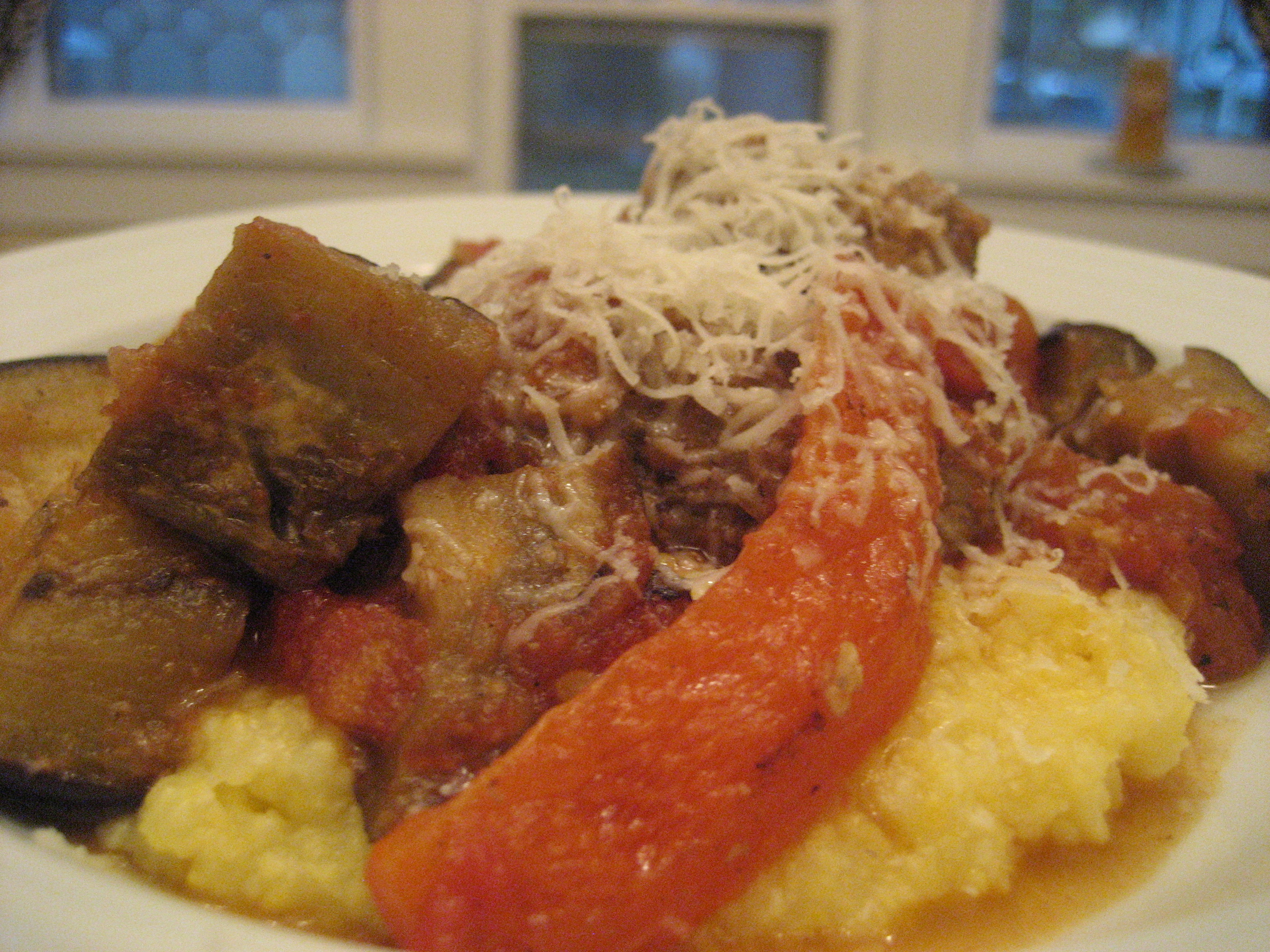
braised lamb paaties

Sicilian Lamb Patties Braised with Eggplant, Peppers, and Tomatoes
adapted from Bon Appétit, October 2008

Serves 6

In place of polenta, you could serve this over penne, ziti or rigatoni.

for the lamb patties:
1/2 cup (25 g) fresh breadcrumbs (from crustless French bread ground in a food processor)
1/4 cup (60 ml) water
1 1/4 lb (570 g) ground lamb
1/2 cup (30 g) finely grated Pecorino cheese
1 large egg, beaten to blend
1 tablespoon chopped fresh marjoram
1 teaspoon coarse kosher salt
1/2 teaspoon freshly ground black pepper
1/8 teaspoon ground cinnamon

for the eggplant mixture:
2 small or 1 large eggplant (about 1 1/2 lb/680 g), unpeeled, cut into 1‑inch cubes
7 tablespoons extra virgin olive oil, divided
coarse kosher salt
1 large red bell pepper, halved, seeded and cut into 1/2‑inch-wide strips
1 onion, finely chopped
1 1/3 cups (320 ml) dry white wine
3 large garlic cloves, minced
2 1/2 cups (450 g) chopped, seeded, peeled tomatoes

for the polenta:
4 cups (1 liter) water
1 teaspoon salt
1 cup (150 g) polenta (coarse cornmeal)
grated Pecorino cheese

To make the lamb patties, combine the breadcrumbs and water in a small bowl. Soak for 5 minutes, then squeeze all the water from the crumbs. Place the crumbs in a large bowl. Add the lamb and remaining ingredients and mix gently to combine. Shape into 12 oval patties, each about 2 1/2 inches long and 3/4 inch thick.

To make the eggplant mixture, preheat the oven to 350°F (180°C). Combine the cubed eggplant and 5 tablespoons of oil in a large bowl and toss to coat. Spread the eggplant out on a rimmed baking sheet and sprinkle with coarse kosher salt and pepper. Bake for 12 minutes, then turn the eggplant over and bake until soft, about 12 minutes longer.

Heat 1 tablespoon oil in a large, deep skillet over a medium-high heat. Add the lamb patties and saute until brown, about 3 minutes per side. Transfer the lamb patties to a plate. Add the bell pepper strips to the drippings in the skillet and saute until they begin to soften, about 4 minutes. Transfer the pepper to the plate with the lamb.

Reduce the heat to medium. Add the remaining 1 tablespoon olive oil and the chopped onion to the same skillet. Cover and cook until the onion is soft, stirring occasionally, about 5 minutes. Add the wine and garlic. Cook, scraping up any browned bits, until the wine is reduced to a glaze, about 7 minutes. Return the lamb and peppers to the skillet, then add the eggplant, tomatoes, and marjoram. Reduce the heat to medium-low. Cover and simmer until the lamb is cooked through and the vegetables are tender, about 12 minutes. If the sauce is thin, simmer, uncovered until it has thickened to the desired consistency. Season the sauce to taste with coarse salt and pepper.

To make the polenta, bring the water and salt to boil in a heavy, large saucepan over a medium-high heat. Gradually whisk in the polenta and reduce the heat to medium-low. Simmer until the polenta is very thick, whisking often, about 20 minutes.

Spoon the polenta into shallow bowls. Top with the lamb and vegetables, sprinkle with Pecorino cheese and serve.

Salmon with Lime Butter Sauce, Summer Tomato Salad, and Quinoa and Kidney Beans

Summer’s over, but no one told my tomato plants. After a cool August and September, our tomatoes are finally ripe and in abundance. I feel like every year I struggle to use up our tomato harvest only to plant more tomato plants the following year. This year, in addition to our CSA tomatoes and backyard containers, we (and by “we” I mean my father-in-law) are working a community garden plot. Kristin’s already posted wonderful tomato recipes, but here’s another to add to the collection.

In addition to the refreshing tomato salad, I rounded off dinner with a tangy broiled salmon dish and a new recipe, which uses quinoa. I recently discovered quinoa and am still experimenting with its possibilities. It’s one of the most nutrient-rich ingredients I’ve eaten, with high protein and lots of fiber. Not a bad carbohydrate choice as I try to shed those last few pregnancy pounds.

Salmon with Lime Butter Sauce
adapted from Gourmet, July 2006

Serves 4

4 pieces center-cut salmon fillet (about 1 inch thick) with skin
1 garlic clove, chopped
1/4 cup (60 ml) fresh lime juice
1/2 teaspoon salt
1/4 teaspoon black pepper
1/4 stick (4 tablespoons/60 g) unsalted butter, melted

Prepare the broiler or grill for cooking over a medium heat. Season the salmon all over with salt and pepper, then broil or grill, skin side down, on a lightly oiled grill rack (if using a grill, keep the lid on) for 8 to 10 minutes, until just cooked through.

While the salmon cooks, puree the garlic with the lime juice, salt, and pepper in a blender until smooth. With the motor running, add the melted butter and blend until emulsified, about 30 seconds.

Remove the salmon from the rack. I usually (but not always) remove the skin before plating; the flesh should slide easily off the skin. Drizzle each fillet with 1 or 2 tablespoons of the lime butter sauce. Serve immediately.

***

Summer Tomato Salad

Summer Tomato Salad
adapted from The New Vegetarian Epicure by Anna Thomas

Serves 6 (salad servings)

3 or 4 big, juicy vine-ripened tomatoes
1/2 medium red onion
1 bunch flat-leaf parsley
2 tablespoons olive oil
a few drops of vinegar
salt and freshly ground black pepper, to taste

Wash the tomatoes and slice them thickly crosswise. Arrange them in a single layer on a large platter. Slice the onion crosswise, thinly but not paper thin. Scatter the onion rings over the tomatoes.

Wash the parsley leaves and spin them in a salad spinner. Arrange them in a wreath around the tomatoes. Drizzle the tomatoes with the olive oil and sprinkle them with a few drops of your favorite vinegar. Add salt to your taste, and grind on some black pepper. Serve within the hour. Do not refrigerate!

***

Quinoa and Kidney Beans
adapted from Feeding the Future Cookbook (American Pregnancy Association member recipes)

8 servings

1 teaspoon vegetable oil
1 onion, chopped
3 cloves garlic, minced
3/4 cup (140 g) uncooked quinoa
1 1/2 cups (360 ml) chicken or vegetable broth
1 teaspoon ground cumin
1/4 teaspoon cayenne
salt and freshly ground black pepper, to taste
kernels from 2 ears of corn
1 x 15-oz (425‑g) can kidney or black beans, rinsed and drained
1/2 cup (15 g) chopped fresh cilantro
juice of 1 lime
avocado and/or sour cream for garnish, if desired

Heat the oil in a medium saucepan over a medium heat. Stir in the onion and garlic and saute until lightly browned. Mix the quinoa into the pan and cover with the broth. Season with cumin, cayenne, salt, and pepper. Bring the mixture to a boil. Cover, reduce the heat and simmer for 20 minutes. Stir the corn into the saucepan and continue to simmer for about 5 minutes, until heated through. Mix in the beans and continue to cook over a low heat for 2 or 3 minutes more. Stir in the cilantro. Garnish with avocado and sour cream, if desired.

Chili Fried Mackerel with Spiced Chickpea Salad and Polenta

About two years ago, my husband, daughter and I went to Copenhagen for a long weekend. Our daughter was two and a half at the time, but already was a great eater. Put her in front of a selection of ice cream, and she won’t choose chocolate or vanilla — she’ll go for Turkish delight (though in all honesty, that might just be because it’s pink). Olives, radishes, salt and vinegar potato chips and Roquefort cheese are some of her favorite foods. So we might have known better than to order her a hamburger off the kids’ menu when we went to the Cap Horn restaurant one night. She wouldn’t touch it, and instead devoured almost all of the trout Matt had ordered for himself, simply pan fried in butter (poor Matt wound up eating the burger). When it comes to fish (and her tastes in general), it seems that the stronger the flavor, the more she likes it.

This past summer, I served mackerel to her for the first time, as well as my one-year-old son. They each gobbled up their entire fillet and ate most of ours to boot. We couldn’t get over it, since we thought it might be too strong-tasting for them compared to, say, white fish. The next time he was in getting fish, Matt mentioned to the fishmonger how much our kids had liked it, who wasn’t surprised. “Kids love mackerel,” he said. That’s good news to me, since it’s an oily fish and so is a good source of omegas, plus it’s cheap, about 1 euro per fillet.

Mackerel is still in season, so get some while you can and give this simple recipe a try, which only takes 5 minutes to cook. If you’re serving this to kids who don’t like spicy food, just fry their fish first and leave out the chili, then add it to the pan when you’re ready to fry the rest. Ask your fishmonger to debone the mackerel for you, especially if you’re serving it to children, because it has lots of them and some of them are pretty big.

Chili Fried Mackerel
from Fresh from the Sea by Clodagh McKenna

Serves 2

2 tablespoons (60 g) butter
1 red chili, deseeded and finely chopped
1 garlic clove, crushed
4 fresh mackerel fillets
sea salt and freshly ground black pepper
juice of 1 lemon

Heat a frying pan and drop in the butter, chili and garlic. Once the chili butter begins to foam, add the mackerel, skin side down, and fry for 2 minutes. Season with salt and pepper, turn the fish over, squeeze the lemon juice over the fish and cook for a further 2 minutes. Remove to a plate and drizzle the chili butter over the fillets.

***

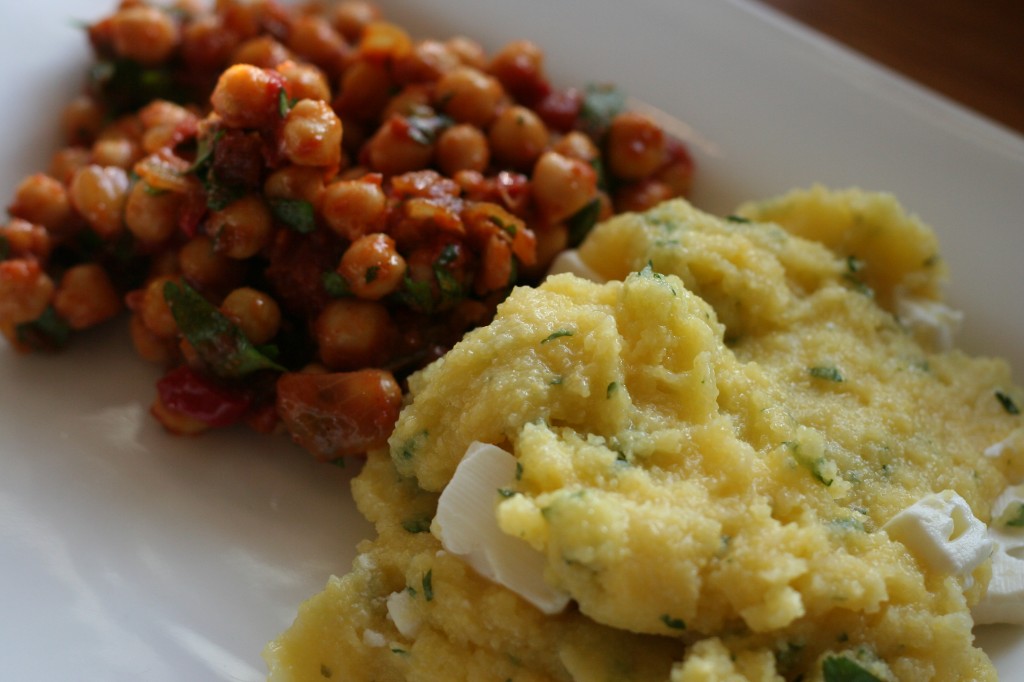
spiced chickpea salad and polenta with feta and cilantro

Spiced Chickpea Salad
adapted from Avoca Café Cookbook 2

Serves 6

1 onion, finely chopped
3 tablespoons olive oil
1‑inch piece of fresh root ginger, grated (or 1 teaspoon ground ginger)
1 red chili, deseeded and finely chopped
2 teaspoons curry powder
1 teaspoon ground cumin
1 teaspoon ground coriander
pinch of turmeric
4 garlic cloves, chopped
1 x 14-oz (400‑g) can of tomatoes
3 x 14-oz (400‑g) cans of chickpeas, rinsed and drained
1 bunch of fresh cilantro, roughly chopped
1 bunch of fresh flat-leaf parsley, roughly chopped

Gently saute the onion in the olive oil for 10 to 15 minutes without allowing it to color. Add all the spices, chili and the garlic and cook for 2 minutes. Add the tomatoes and reduce the heat to low. Continue to cook for 15 to 20 minutes, stirring occasionally, to allow it to reduce slightly. Dress the chickpeas in the tomato sauce while it’s still warm. Allow the chickpea mixture to cool slightly, then add the herbs (this stops them from discoloring). Serve warm or at room temperature. This salad is even better the next day.

***

Polenta with Feta and Cilantro
adapted from Vegetarian Cooking for Everyone by Deborah Madison

2 cups (340 g) coarse cornmeal
6 to 8 cups (about 1 1/2 to 2 liters) vegetable or chicken stock or water
2 to 6 tablespoons (30 to 90 g) butter (optional)
1 1/2 cups (250 g) feta cheese, cubed or crumbled
1 bunch fresh cilantro, chopped

Bring 6 cups (1 1/2 liters) of the stock (or water) to a boil in a large, heavy-based saucepan and add the cornmeal in a steady stream, whisking constantly to stop lumps from forming and to help prevent the maize from seizing up in the first few minutes. Lower the heat and cook, stirring almost constantly, for 30 to 45 minutes. If the polenta seizes up into a hard mass, add small amounts of the remaining 2 cups (480 ml) of stock or water while it cooks to smooth it out again. When done, season to taste with salt (you may not need any if your stock is salty). Stir in butter to taste.

Off the heat, stir in the cubed or crumbled feta cheese and chopped cilantro. Serve the soft polenta immediately or keep it warm over boiling water until ready to serve.